Most carbon accounting starts in a spreadsheet. It is familiar, it is already on every finance team's desktop, and for a first-pass estimate it does the job. The problem shows up later, when the same spreadsheet has to carry mandatory disclosure under the Australian Sustainability Reporting Standards (ASRS), survive an external audit, and be rebuilt again next year.
This article answers a question finance leaders ask often: can you run carbon accounting in a spreadsheet, and where does that approach start to cost you? It then sets out five specific areas where dedicated software like Avarni reduces risk, effort and cost compared with a manual, spreadsheet-based process.
Key takeaways
- A spreadsheet can produce a rough emissions estimate, but it struggles with the data volume, version control and audit trail that ASRS-grade reporting requires.
- The main risks of spreadsheet carbon accounting are human error, no clear audit trail, and a process that starts from scratch every reporting cycle.
- Dedicated software automates data import, applies emission factors consistently, and records every calculation for assurance.
- Avarni draws on 65,000+ emission factors, integrates with more than 1,000 business systems, and keeps a full audit log of who changed what and when.
- The right platform lowers compliance risk and manual cost while giving finance teams control over emissions data year on year.
Can you do carbon accounting in a spreadsheet?
Yes, for a small footprint or an initial baseline. A spreadsheet works when you have a handful of emission sources, one person maintaining the file, and no external assurance to pass.
It becomes a liability once the numbers matter for disclosure. Manual entry carries a real risk of human error, where one broken formula or misaligned dataset can compromise an entire reporting cycle. Spreadsheets rarely hold a clear audit trail, they lack a consistent methodology across business units, and each reporting period tends to start again from a blank template. For a fuller breakdown, see our article on why manual carbon accounting fails.
Spreadsheet vs carbon accounting software
The table below compares a typical spreadsheet process with a dedicated platform across the areas that matter most for ASRS reporting.
How emissions are calculated
Carbon accounting relies on two core methods, and a credible process uses both.
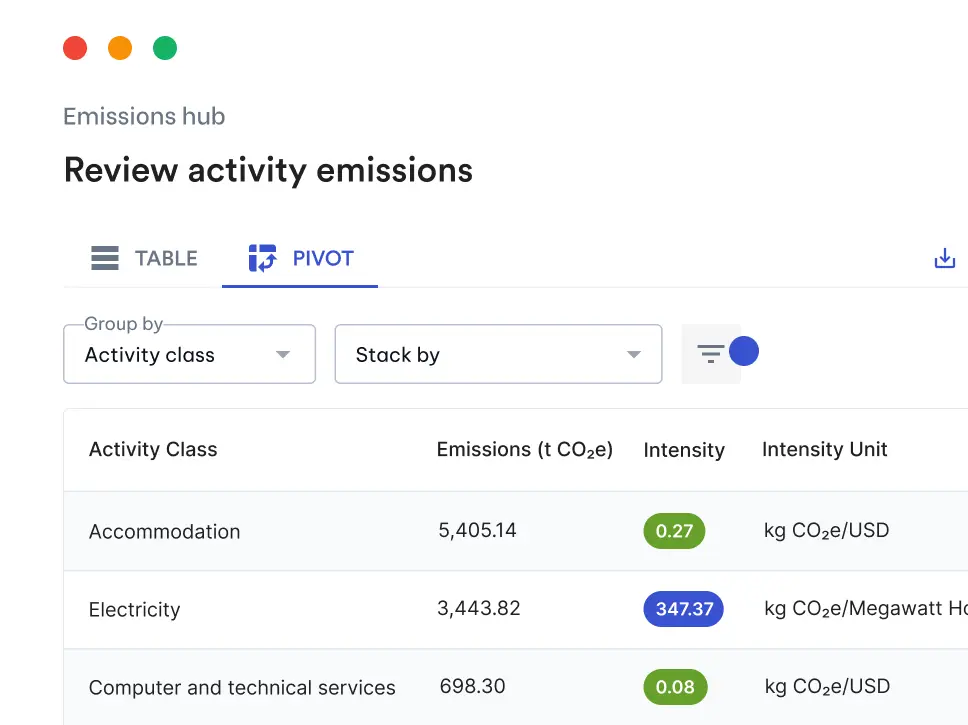
Activity-based data uses real quantities, such as litres of fuel or kilowatt-hours of electricity, matched to specific emission factors. It is the more accurate approach and it depends on detailed data collection, often directly from suppliers. Spend-based data multiplies a financial value by an emission factor to estimate emissions per unit. It is a useful proxy when activity data is not available, particularly across a large Scope 3 supply chain.
Avarni combines both methods, using activity-based data where it exists and falling back to spend-based estimates to fill gaps. Doing this well in a spreadsheet, across thousands of transactions and suppliers, is where the manual approach starts to break down.
5 ways Avarni is better than a carbon accounting spreadsheet
1. Faster, cleaner data entry
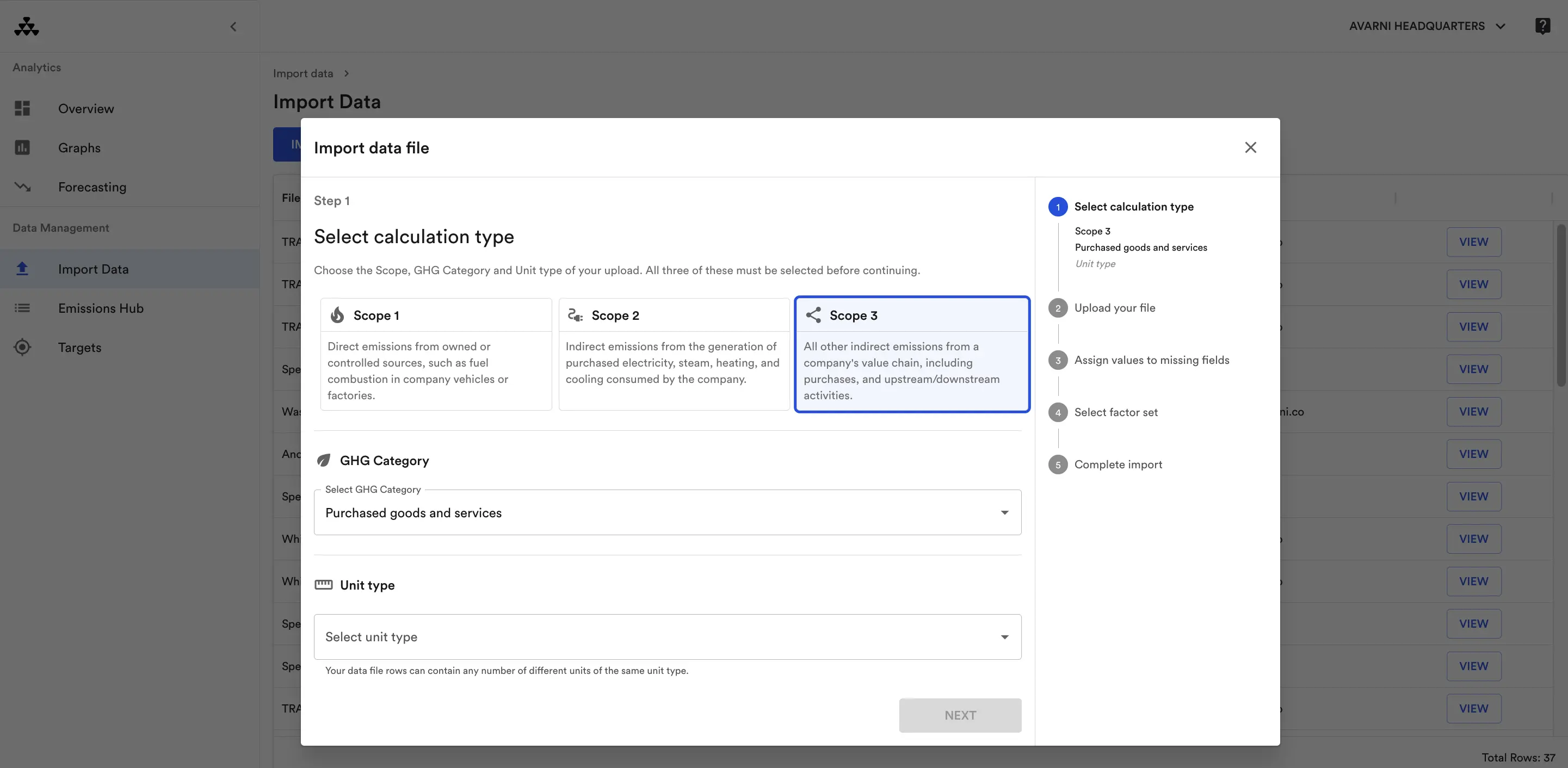
Avarni imports data no matter its structure or taxonomy, so finance teams spend less time reformatting source files. It integrates with more than 1,000 platforms, including SAP, NetSuite, Xero, Microsoft Dynamics 365, Workday and Power BI, and it collects Scope 1 to 3 data directly through free supplier engagement requests. That removes most of the copy and paste work a spreadsheet demands.
2. Automated, auditable emissions calculations
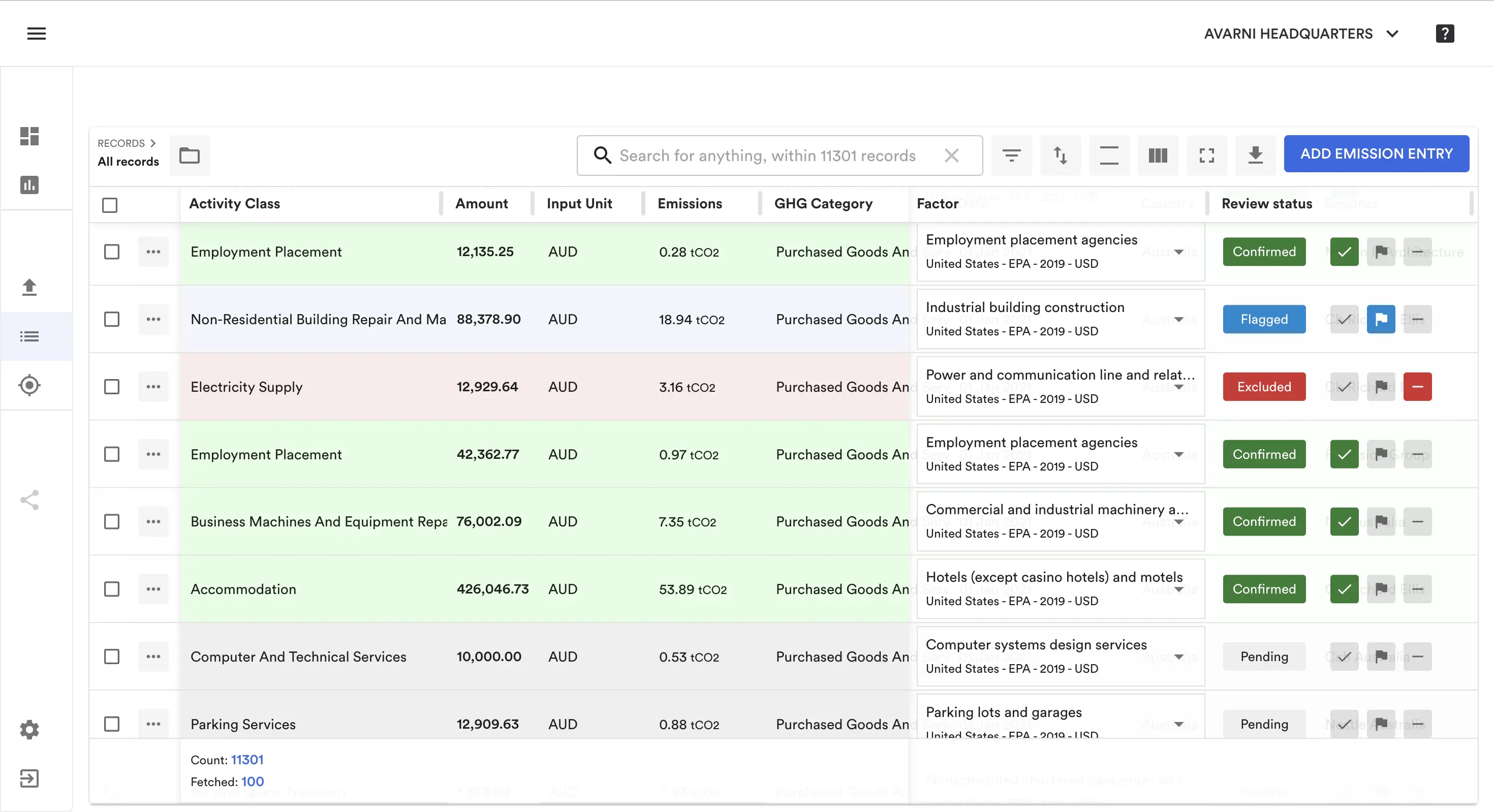
The platform automates emissions calculations across Scope 1 to 3, drawing on a library of 65,000+ emission factors and applying consistent rules to every source. You can override factors with your own licensed databases, and every factor value and source stays visible for audit. Avarni maps and calculates even the largest data files in minutes rather than weeks, with full transparency behind each figure.
3. Insight-driven reporting
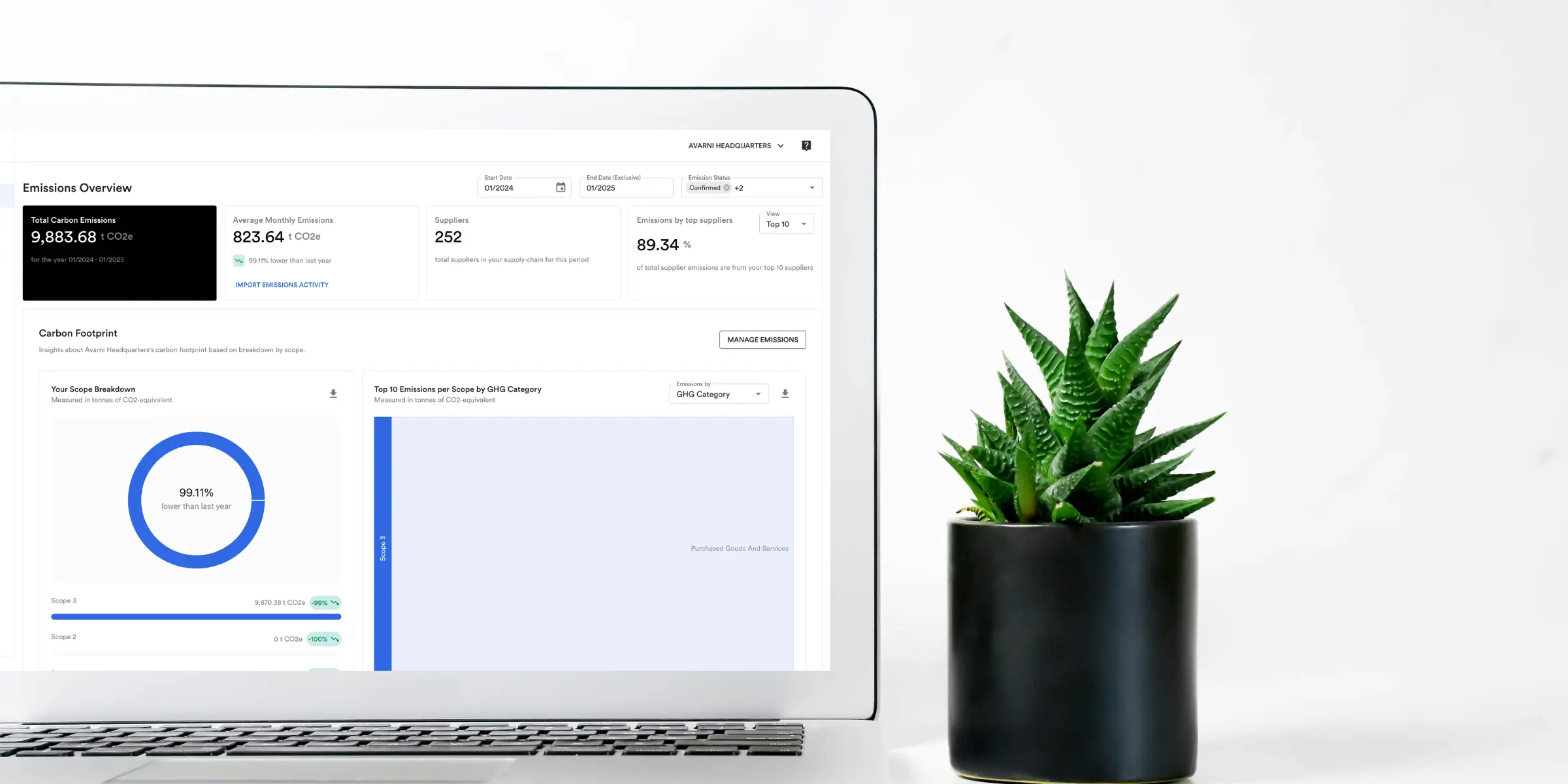
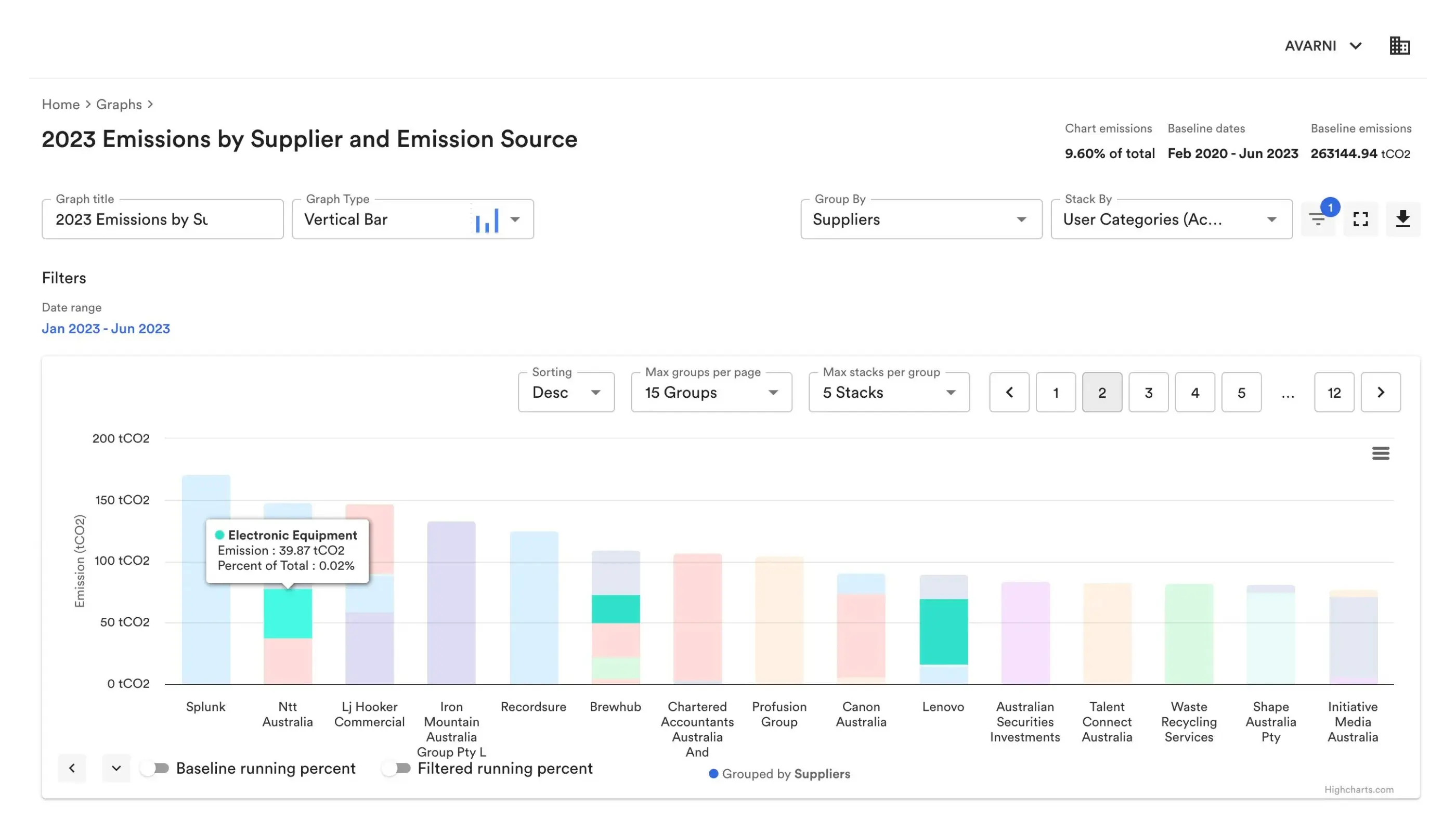
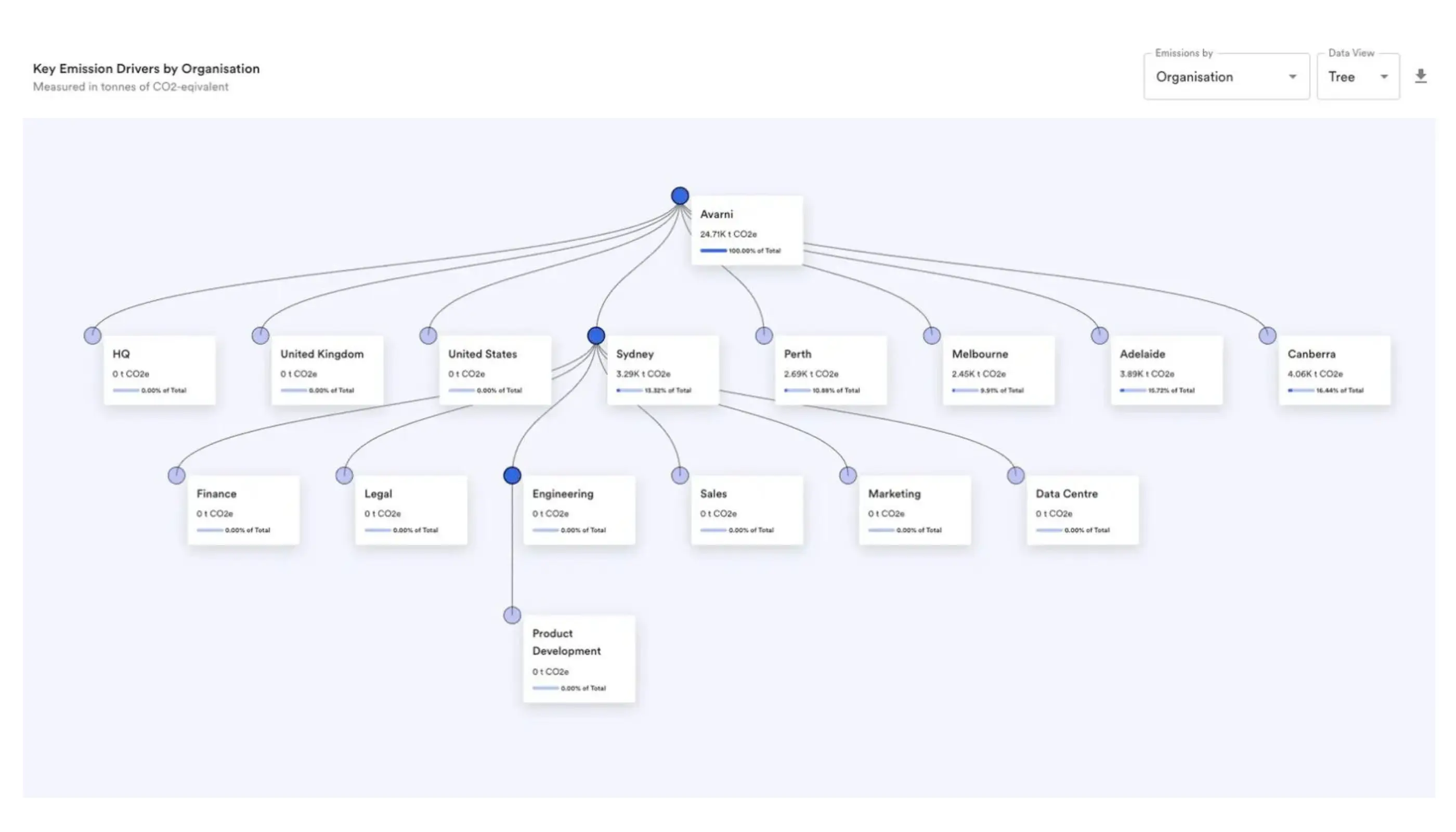
Avarni turns emissions data into reports that hold up for both boards and auditors. Teams can visualise emissions by category, country, department, supplier and scope, customise charts, and export in multiple formats. Outputs align with the major frameworks, including the GHG Protocol, ASRS, AASB S2 and ISSB, so the same dataset serves disclosure and internal decision-making.
4. Forecasting and scenario planning
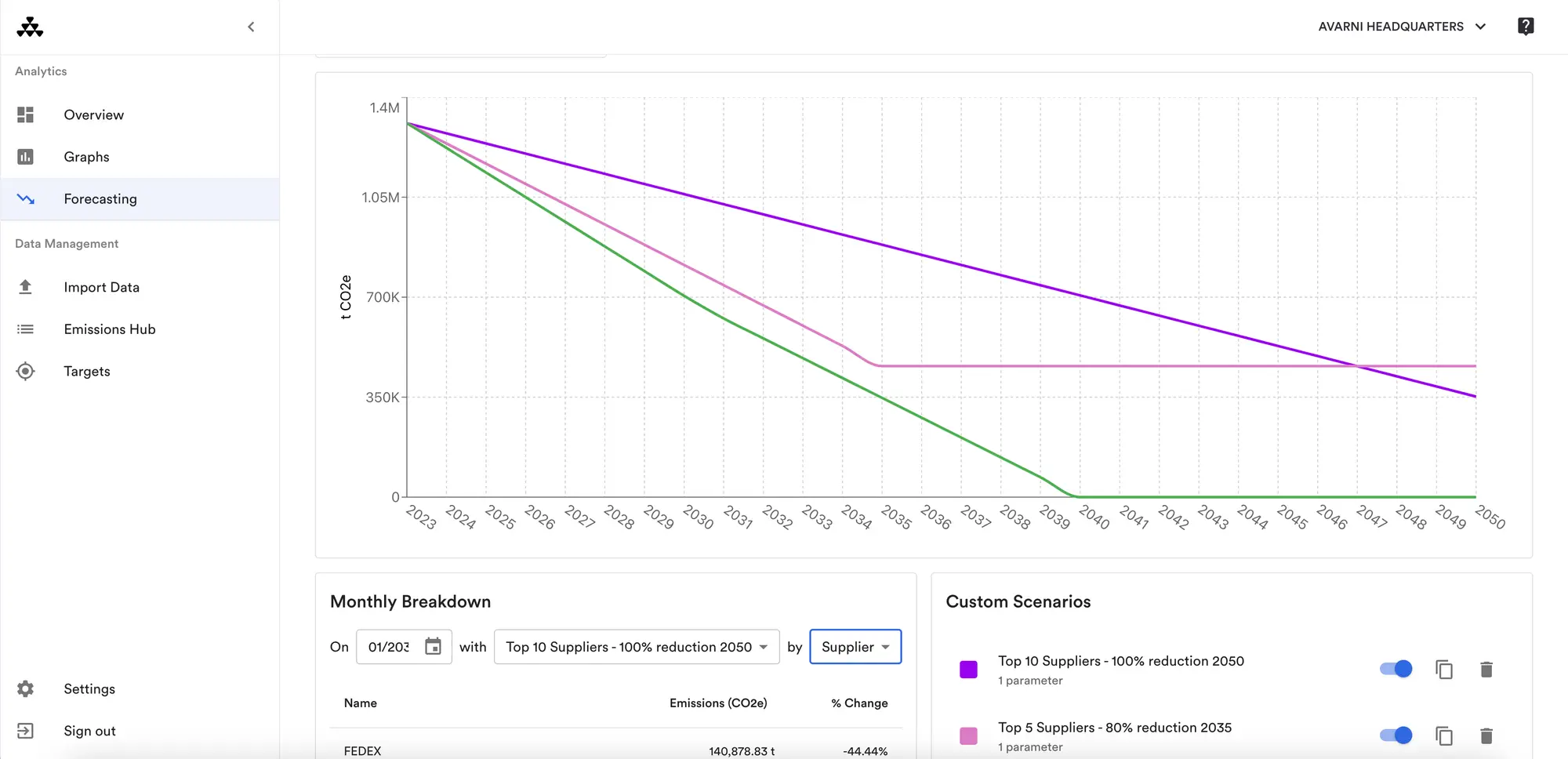
Reporting tells you where emissions sit today. Avarni's forecasting tools show where they are heading. Finance teams can model how future consumption affects emissions, visualise science-based target adoption, and run gap analysis against net-zero goals. This gives leadership a defensible basis for setting targets and allocating capital, which a static spreadsheet cannot support.
5. Built-in audit logs
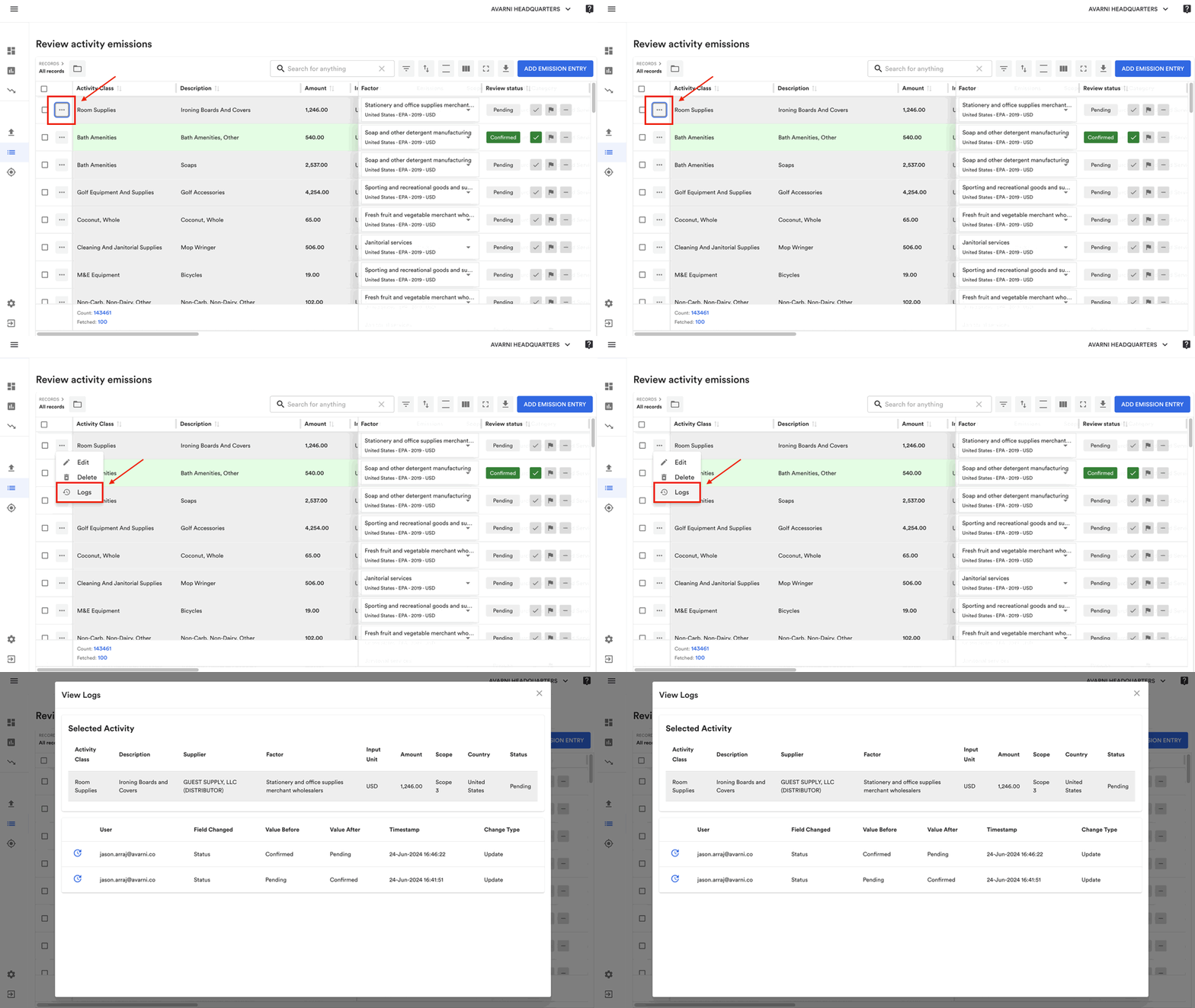
Every change in Avarni is recorded, with timestamps and the user responsible. Classification rules capture the reasoning behind each emissions category, and calculation breakdowns trace the path from raw data to final figure. This is the evidence external assurance depends on, and it is the piece spreadsheets almost always lack. Learn more about audit and assurance support.
When a spreadsheet might still be enough
A spreadsheet remains reasonable for a very small organisation with a simple footprint, no mandatory reporting obligation, and no external audit ahead. Once you fall inside the ASRS reporting groups, need Scope 3 supplier data, or expect assurance, the control, scale and audit trail of dedicated software become the deciding factors.
Frequently asked questions
Can you do carbon accounting in Excel?
Yes, for a small footprint or an initial baseline. Excel struggles once you need to process large Scope 3 datasets, apply emission factors consistently, and produce an audit trail for external assurance, which is where dedicated software reduces risk and effort.
Why is a spreadsheet risky for ASRS reporting?
Spreadsheets carry a high risk of human error, rarely hold a clear audit trail, and use inconsistent methodology across business units. Under ASRS, disclosures must be accurate, auditable and consistent with financial filings, which is difficult to guarantee in a manual file.
What does carbon accounting software do that a spreadsheet cannot?
It automates data import from business systems, applies a maintained library of emission factors, records every calculation for audit, and scales to millions of rows. It also supports supplier engagement, forecasting and framework-aligned reporting from a single source.
Is Avarni suitable for ASRS and AASB S2 reporting?
Yes. Avarni is built for CFOs and finance teams reporting under ASRS, and its outputs align with the GHG Protocol, AASB S2 and ISSB. It supports organisations across Group 1 to 3 reporting thresholds.
Summary
- Can you do carbon accounting in a spreadsheet: A spreadsheet suits a small footprint or first baseline, but it struggles with the data volume, audit trail and consistency that mandatory ASRS reporting requires.
- Spreadsheet vs carbon accounting software: Across data import, factors, calculations, reporting, forecasting and audit, dedicated software reduces manual effort and compliance risk.
- How emissions are calculated: Credible carbon accounting uses both activity-based and spend-based data, and Avarni combines the two to balance accuracy with coverage.
- Faster, cleaner data entry: Avarni imports data of any structure from 1,000+ systems and collects supplier data directly, removing most manual entry.
- Automated, auditable calculations: The platform applies 65,000+ emission factors consistently and keeps every value visible for audit.
- Insight-driven reporting: Emissions data becomes board-ready and auditor-ready reporting aligned to the GHG Protocol, ASRS, AASB S2 and ISSB.
- Forecasting and scenario planning: Avarni models future emissions and target pathways, giving finance a defensible basis for decisions.
- Built-in audit logs: Every change is timestamped and attributed, providing the evidence external assurance depends on.
Spreadsheets got carbon accounting started for most finance teams. For ASRS-grade disclosure, dedicated software gives you the control, audit readiness and scale to report with confidence year-on-year. Talk to a specialist about moving off spreadsheets.
Originally published January 30, 2023