In 2025, Avarni focused on building the most reliable, audit-ready carbon accounting platform to support Australian businesses preparing for ASRS-aligned disclosures. With mandatory reporting deadlines on the horizon, our goal has been to make emissions reporting faster, more accurate, and easier to scale, without sacrificing auditability.
Every month this year brought meaningful improvements to help businesses move from estimates to defensible data. From automating invoice extraction to expanding supplier data collection and benchmarking capabilities, Avarni has become the go-to platform for organisations that need to meet disclosure obligations with confidence and clarity.
Here’s a look back at what we delivered this year, and how it’s helping our users stay one step ahead in the carbon reporting landscape.
Enabling audit-ready data from primary sources
One of the biggest improvements in 2025 was our expanded invoice processing engine, which now supports automated extraction from over 50 vendors. This includes fuel, electricity, and waste invoices, all key data sources for Scope 1 and 3 reporting. By November, our testing showed 96% extraction accuracy across nearly 12,000 individual data points.
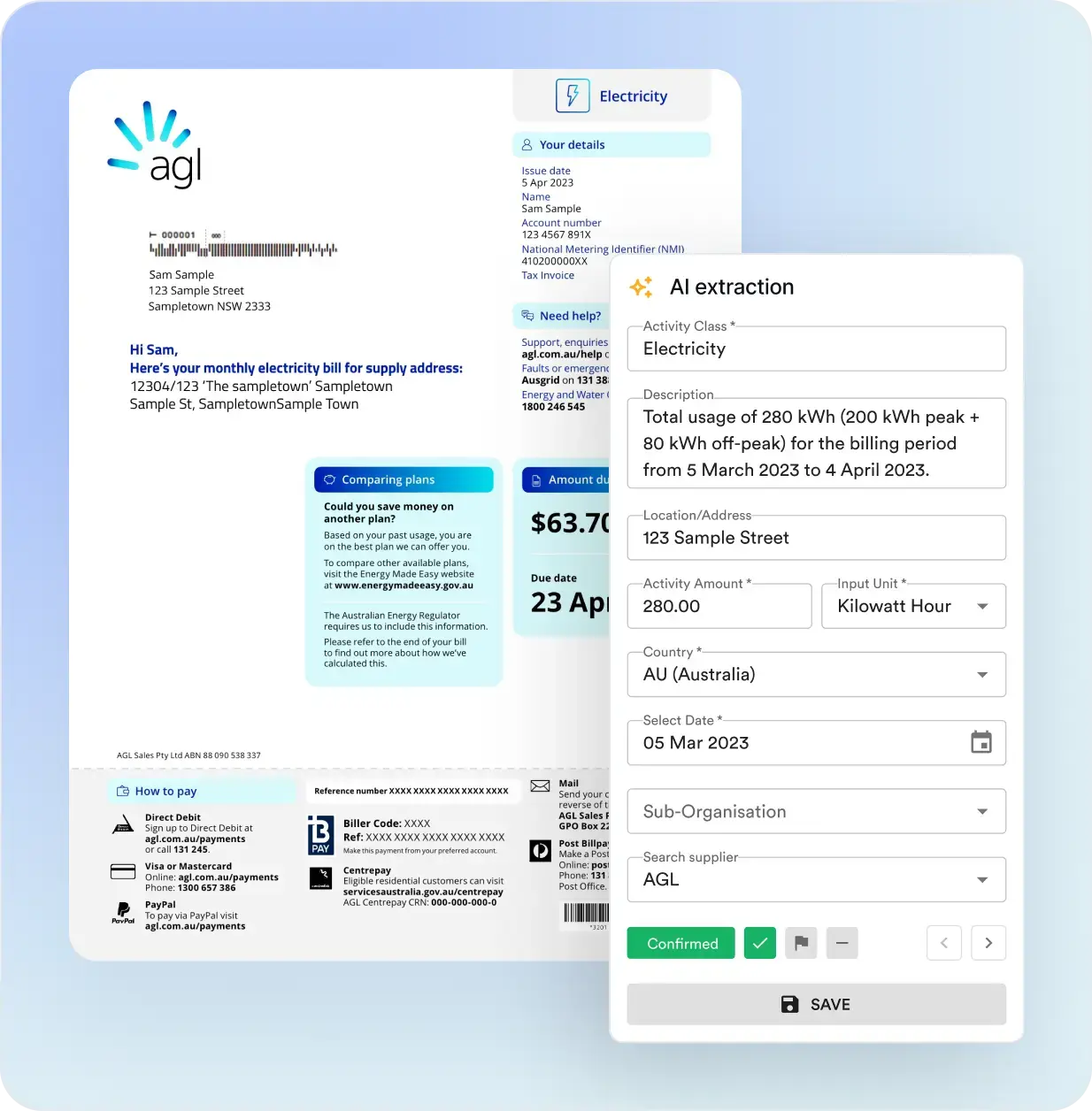
This is a game-changer for businesses moving toward activity-based emissions accounting. Instead of relying on high-level spend estimates, users can now ingest granular, primary-source data directly into Avarni and generate audit-ready emissions results within minutes. For businesses preparing for ASRS or other regulatory audits, this level of data traceability makes all the difference.
Smarter AI that delivers transparency and control
We’ve also made Avarni’s AI more predictable, traceable, and flexible. Throughout the year, we released a range of updates to help users better understand and guide how emission factors are applied.
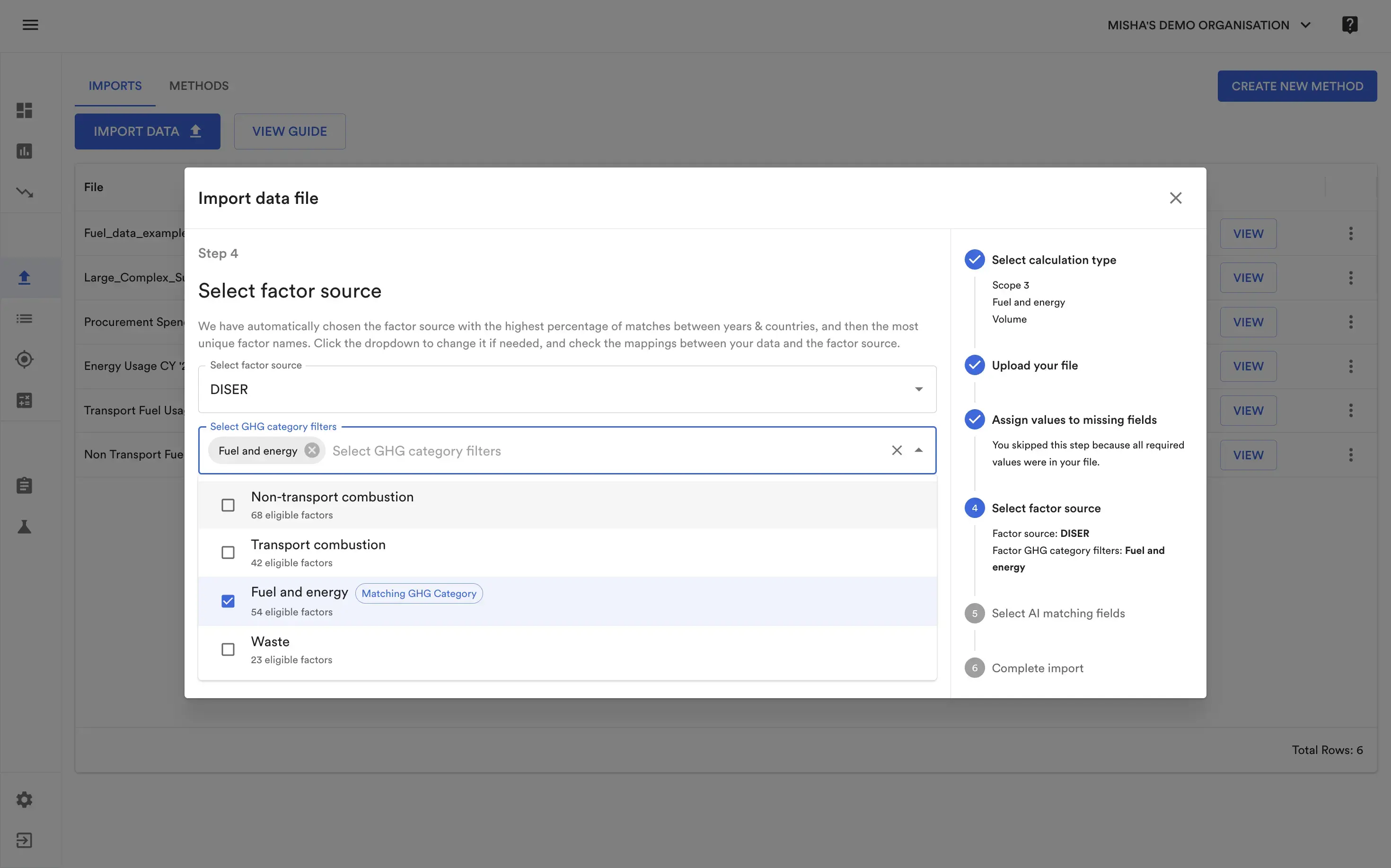
In May, we launched category filtering for factor selection, giving users the ability to control which factors Avarni’s AI pulls from during import. This reduced mapping errors and sped up review cycles, especially for fuel and energy data. By July, the platform also began auto-assigning GHG Protocol categories based on factor mappings, eliminating the need to manually split data by category pre-upload.
To support disclosures, we overhauled our Excel export functionality in March. Native Excel files now include separate sheets for emissions, factor sources, inflation and FX rates, GWP values, and calculation logic, ensuring full transparency behind every number. This makes audit prep far easier and ensures alignment with evolving assurance requirements under ASRS.
Free resources to accelerate ASRS readiness
In 2025, we launched our free resources library to help Australian businesses prepare for mandatory climate disclosures and build confidence in their carbon reporting. The library includes practical tools like the Data collection templates for Scope 1, 2 & 3 emissions, Climate Scenario Readiness Checklist, and AASB S2/ASRS Audit Preparation Checklist, all designed to help organisations map internal data to GHG Protocol categories and develop audit-ready inventories.
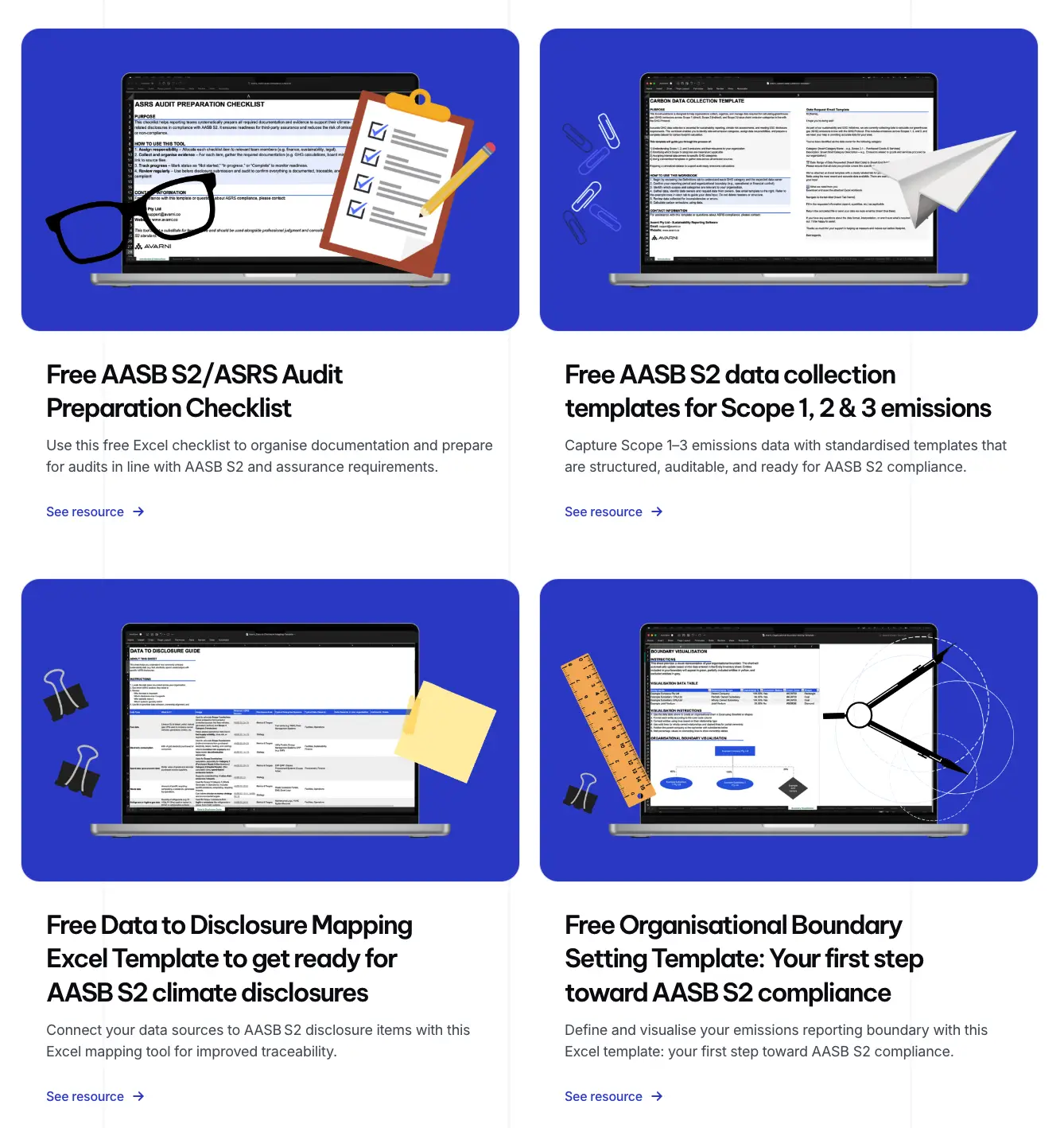
These resources are freely available to support any organisation beginning their reporting journey, and reflect our broader commitment to lifting the standard of climate reporting across the Australian market.
Scalable Scope 3 tools for real-world business workflows
Scope 3 remains the hardest area for companies to manage, so we focused on practical tools that make upstream data collection more feasible. April introduced major improvements to our supplier survey tools, allowing businesses to edit responses, switch between internal and external collection modes, and log all changes for audit. These updates helped users standardise survey workflows and generate cleaner emissions data, without relying on fragmented emails or spreadsheets.

In September, we introduced a new database of company-specific emission factors scraped from public sustainability reports. For businesses unable to engage every supplier, this provides a way to move beyond generic industry averages without adding manual overhead. It’s an ideal solution for organisations preparing ASRS-aligned reports that require defensible assumptions around emissions intensity.
To bring strategic context into the mix, we also integrated live SBTi target tracking. Avarni users can now see which suppliers have set science-based targets and track them in-platform, enabling better decision-making and supplier engagement.
Better insights, benchmarking, and reporting
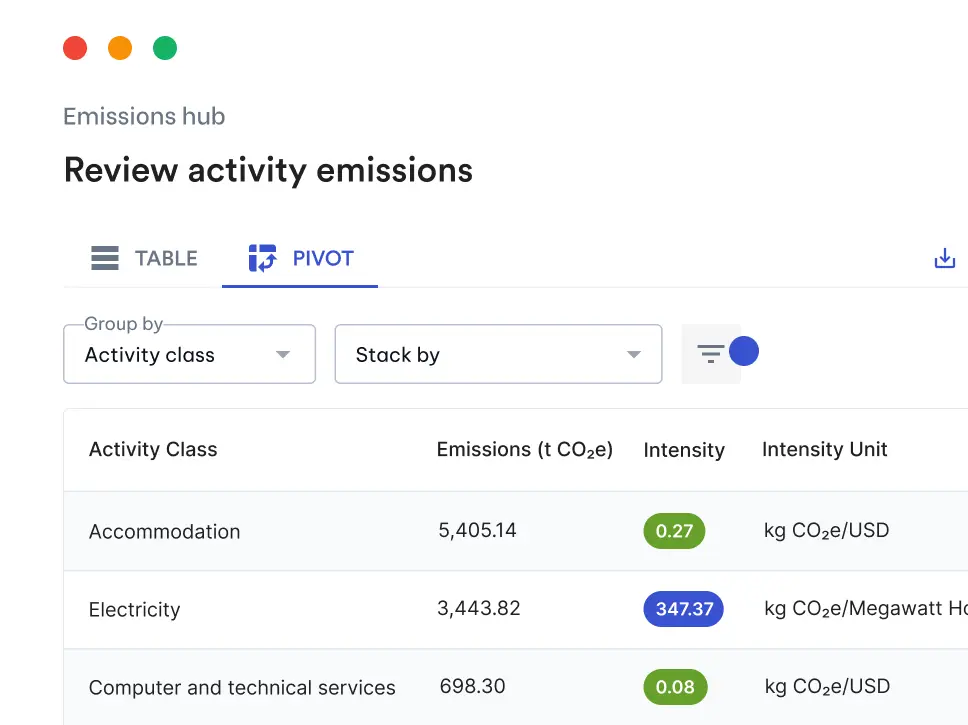
Another key theme in 2025 was visibility: making it easier to find, report, and share insights across your organisation. In May, we added Pivot Tables and Charts to the emissions hub, giving teams a fast way to spot outliers and drill down into high-impact categories. This visual layer sits directly on top of your emissions data, making reviews faster and more interactive.

August introduced automated reporting, allowing users to set up recurring emails with attached Excel exports for internal stakeholders. Whether it's sending updates to the CFO, the board, or category managers, Avarni ensures key teams stay informed, without having to chase down exports.
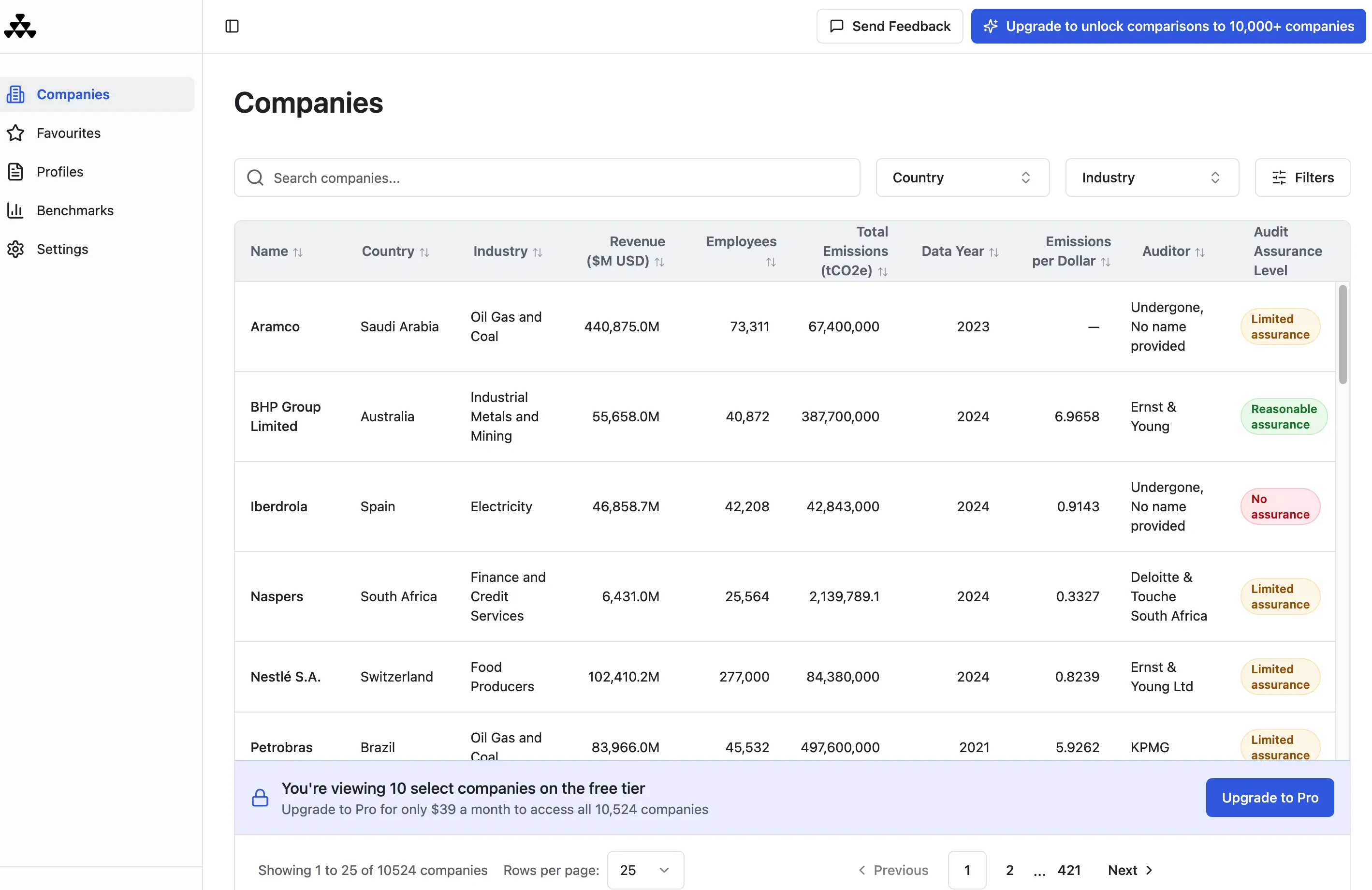
We also expanded our benchmarking tool in October, giving users access to validated Scope 1–3 data from over 10,000 companies across six continents. This lets businesses understand how their emissions compare by sector or region and provides source-linked data for assurance and audit purposes.
A more reliable, scalable platform behind the scenes
While many updates were focused on features, 2025 also included significant performance improvements. From June through November, our engineering team made deep optimisations across the back end to improve load times, speed up data processing, and increase AI mapping accuracy.
These changes make a big difference at scale. Whether you’re importing hundreds of thousands of rows or managing surveys across dozens of business units, Avarni now handles large datasets more efficiently. As disclosure requirements tighten and businesses are expected to report more frequently, these under-the-hood improvements ensure that the platform stays responsive and reliable.
Thank you for a remarkable 2025
A sincere thank you to the Avarni team, our customers, partners, and investors for making 2025 a remarkable year. Your support has been instrumental in helping us support Australian businesses on the path to ASRS compliance and deliver audit-ready emissions disclosures with confidence.
Whether you're using Avarni to prepare for mandatory reporting, streamline supplier data collection, or improve the accuracy of your carbon inventory, we’re proud to be building the platform that makes it possible. We look forward to continuing this work in 2026 as we expand Avarni to meet the evolving needs of Australian businesses.