Australian enterprises are choosing ASRS compliance reporting software the same way they choose any core finance system, by testing it against risk, governance, control and cost. The Australian Sustainability Reporting Standards (ASRS), built on AASB S2, make climate disclosure mandatory for large Australian companies, and those disclosures sit in the annual report and face external assurance.
That raises the stakes on how emissions are measured and evidenced. Finance leaders are evaluating platforms on audit readiness, regulatory coverage, data automation and how well the system holds up year-on-year. This guide sets out the criteria that matter.
Key takeaways
- ASRS (AASB S2) makes climate disclosure mandatory and subject to audit, so software selection is a governance and risk decision for finance teams.
- The strongest platforms cover the full Australian regulatory stack: NGER, the Safeguard Mechanism, AASB S2 and the GHG Protocol.
- Audit readiness, Scope 3 automation, enterprise integrations and usability separate serious platforms from spreadsheets and light-touch tools.
- Group 1 reporters are moving off spreadsheets to remove manual effort, cut audit risk, build solid data foundations and reduce key-person risk.
Start with what ASRS actually requires
ASRS requires disclosure across four areas: governance, strategy, risk management, and metrics and targets. Reporting is phased in by entity size, with Group 1 reporting from periods on or after 1 January 2025, Group 2 from 1 July 2026 and Group 3 from 1 July 2027. Scope 3 emissions are required from each group's second reporting year.
These disclosures carry the same weight as financial information and are subject to assurance. The software you choose has to produce numbers that trace back to source, stand up under audit, and repeat consistently each year. Any platform that cannot evidence its calculations creates a governance gap that a CFO will have to explain later.
Regulatory alignment across Australian frameworks
Local coverage is the first filter. An enterprise platform should align with the frameworks Australian reporters actually face: NGER, the Safeguard Mechanism, AASB S2 and the GHG Protocol. ISSB alignment matters where a global parent reports under IFRS S2, and Australian emission factors and financial-year handling keep the data relevant to local operations.
Avarni covers the GHG Protocol, ASRS, AASB S2 and ISSB, and aligns with NGER and Safeguard Mechanism requirements. That breadth lets one platform serve multiple obligations rather than forcing teams to reconcile figures across separate tools.
Audit readiness and assurance
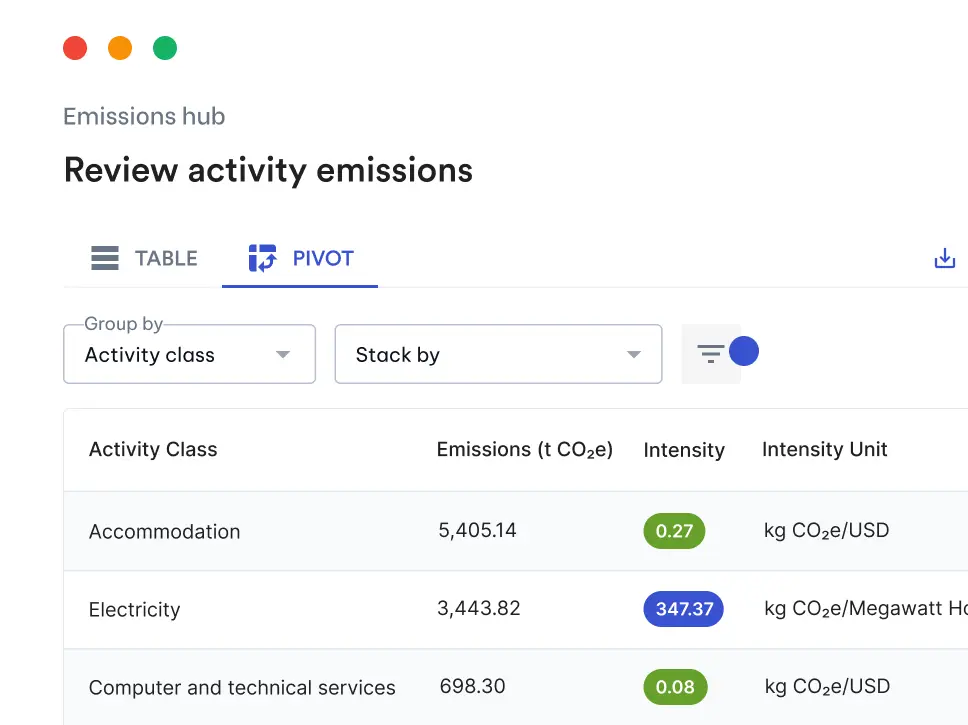
Manual handling is difficult to evidence under assurance, and that is where most reporting risk sits. Look for QA workflows, changelogs, calculation transparency and a recorded rationale for how each emission source is classified. Auditors need to follow the path from raw data to final figure without a manual reconstruction.
Avarni builds audit evidence into the reporting process from the start. Classification rules record why each category was chosen, and calculation breakdowns trace every figure back to source data. To date, every Avarni client submission has cleared external assurance on the first attempt, which is the clearest signal that the evidence trail works.
Scope 3 depth and data automation
Scope 3 is the largest and hardest part of most inventories, and it is where spreadsheets break down. Manual effort is slow, hard to repeat and prone to error, and it ties reporting to whoever built the model. Serious platforms automate the heavy lifting instead.
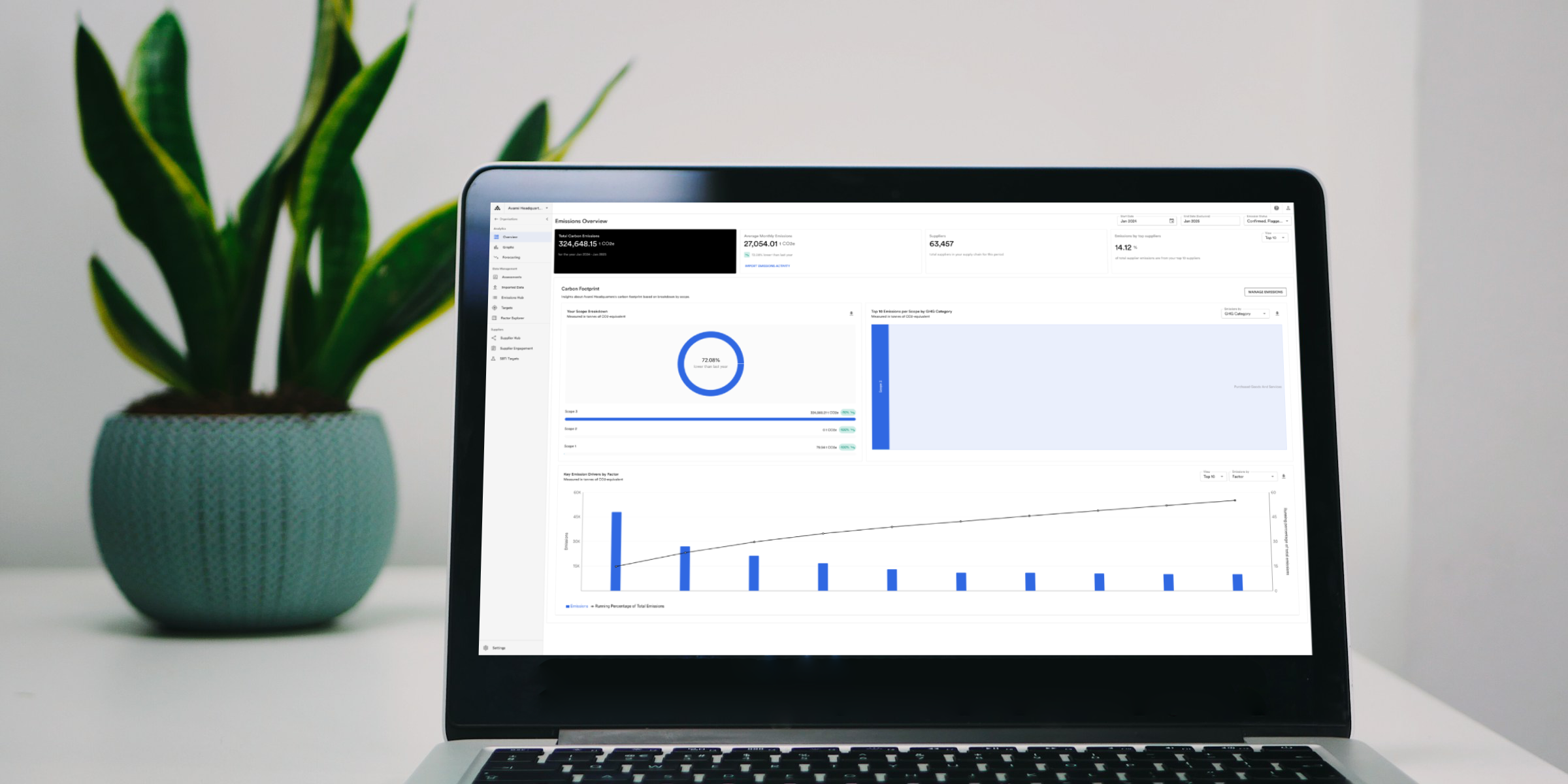
Avarni uses AI to automate emissions calculations for Scope 1 to 3, extract invoice and financial data, and apply the right emission factors from a library of more than 65,000. Where supplier data is missing, supplier engagement tools collect activity-based data directly, with spend-based estimates filling the gaps. This is what turns Scope 3 from an annual scramble into a controlled, repeatable process.
Integrations and scalability
Enterprise reporting draws on data that already lives across finance, procurement and operations systems. A single platform that integrates with existing infrastructure keeps that data flowing without manual exports. Avarni integrates with more than 1,000 enterprise systems, including SAP, NetSuite, Xero, Microsoft Dynamics 365, Workday and Power BI, and is built to handle datasets running to millions of rows. A platform that scales with growing data volumes and expanding Scope 3 boundaries will still serve the business as obligations tighten and reporting groups expand.
Usability and reducing key-person risk
Reporting cannot depend on one specialist. When emissions knowledge sits with a single person, every reporting cycle carries key-person risk. An intuitive platform that non-experts can operate spreads that capability across the team and keeps reporting resilient.
Avarni is built to be usable by finance and operations staff who are not emissions experts, and every customer gets a dedicated implementation team that configures the platform around their data. The onboarding is structured to build in-house capability, so the organisation owns its reporting rather than relying on external consultants each year.
Why Cement Australia chose Avarni for its ASRS compliance reporting software
To see these criteria in a real selection decision, Cement Australia is a useful example. As a Group 1 reporter, the team ran the same trade-offs any enterprise faces and set out its logic clearly when it moved to dedicated software.
The case for a dedicated solution came down to four points:
- The manual effort of Scope 3 in spreadsheets
- The human error and audit risk of manual handling
- The need for solid data foundations before improving activity data, and
- The goal of reducing key-person risk.
Avarni won on regulatory alignment across NGERs, the Safeguard Mechanism, AASB S2 and the GHG Protocol, audit-ready QA workflows and changelogs, scalable integrations with existing infrastructure, and a platform that non-emissions experts can use. Each of those reasons is one of the criteria worth weighing in any ASRS software decision.
You can hear the full story in the on-demand webinar, How Cement Australia tackled Scope 3, featuring Richard Mason from Cement Australia and Avarni co-founder Misha Cajic.
Frequently asked questions
How do Australian enterprises choose ASRS compliance reporting software?
Enterprises assess platforms against regulatory coverage (NGER, Safeguard Mechanism, AASB S2 and GHG Protocol), audit readiness, Scope 3 automation, integrations with existing systems, and usability for non-experts. Because ASRS disclosures are audited, the priority is software that produces traceable, assurance-ready figures year-on-year.
Is ASRS reporting subject to audit?
Yes. ASRS disclosures carry the same weight as financial information and are subject to external assurance, which is why audit-ready evidence trails are a core selection criterion.
Can enterprises meet ASRS with spreadsheets instead of software?
Spreadsheets struggle with the volume and traceability ASRS requires, particularly for Scope 3. Manual handling is hard to evidence under assurance and concentrates knowledge in one person, which is why most large reporters move to dedicated software.
Which frameworks should ASRS software support?
For Australian enterprises, look for coverage of the GHG Protocol, ASRS and AASB S2, alignment with NGER and the Safeguard Mechanism, and ISSB support where a global parent reports under IFRS S2.
Summary
- Start with what ASRS actually requires: ASRS mandates audited disclosure across governance, strategy, risk management, and metrics and targets, phased in across Group 1 to 3, so software must produce traceable, repeatable figures.
- Regulatory alignment across Australian frameworks: The right platform covers NGER, the Safeguard Mechanism, AASB S2 and the GHG Protocol. Avarni covers these plus ISSB in one system.
- Audit readiness and assurance: QA workflows, changelogs and calculation transparency are essential. Avarni builds audit evidence in, and every client submission has cleared assurance on the first attempt.
- Scope 3 depth and data automation: Scope 3 is the hardest area, and automation removes manual effort and error. Avarni automates Scope 1 to 3 with 65,000+ factors and supplier engagement tools.
- Integrations and scalability: A single platform should connect to existing systems and scale with the business. Avarni integrates with 1,000+ systems and handles datasets of millions of rows.
- Usability and reducing key-person risk: Software should be usable by non-experts and build in-house capability. Avarni pairs an intuitive platform with a dedicated implementation team.
- What Cement Australia looked for: Cement Australia chose a dedicated solution to cut manual effort, audit risk and key-person risk, and chose Avarni for regulatory alignment, audit readiness, integrations and usability.