Last year's number should survive this year's restructure
The boundary has always been the part of a GHG account that sits in a spreadsheet: which entities, at what ownership, which sites, and from when. This month it becomes a record in the platform. Market-based Scope 2 for Australia and New Zealand also landed.
Entities and facilities
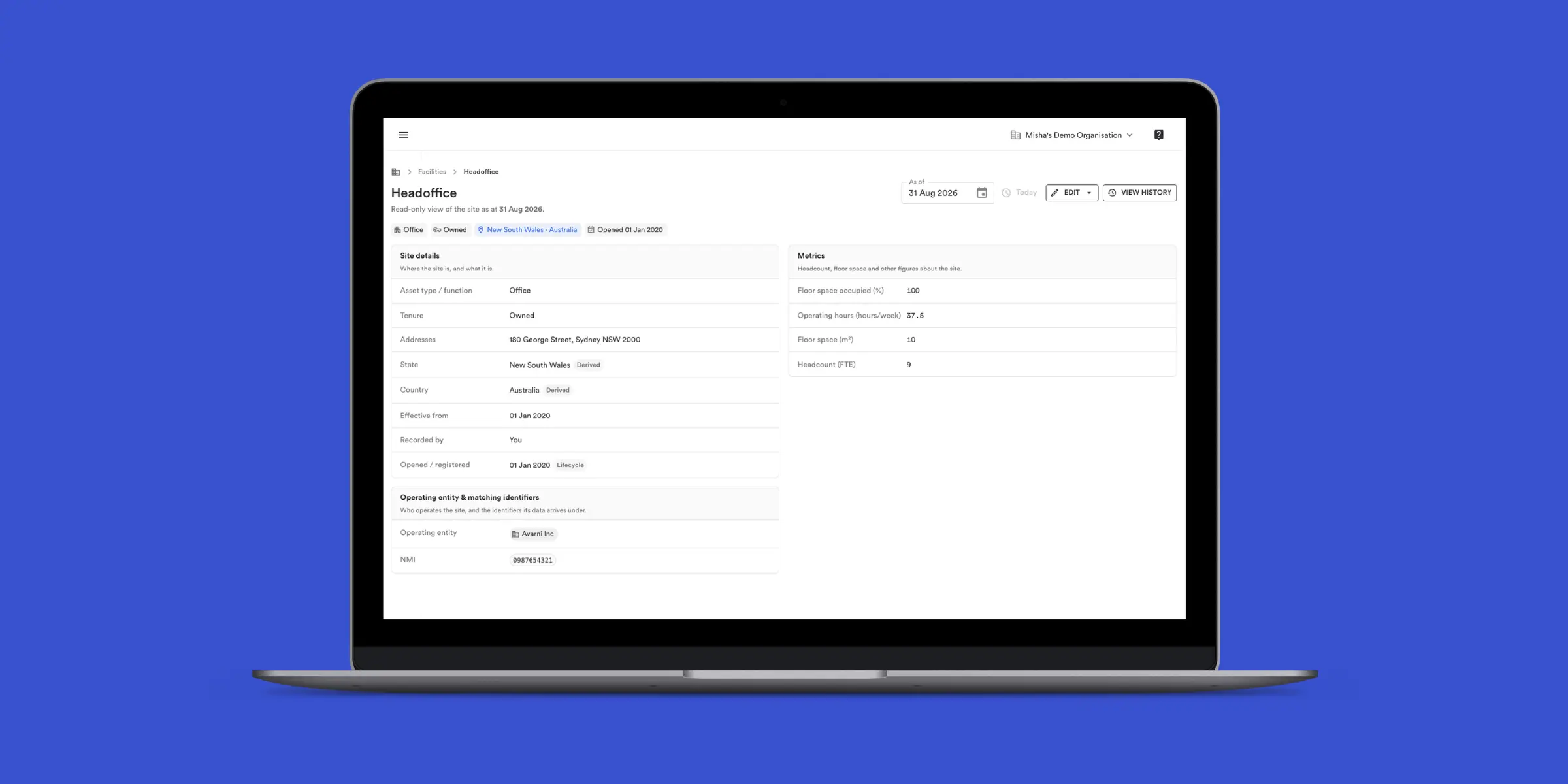
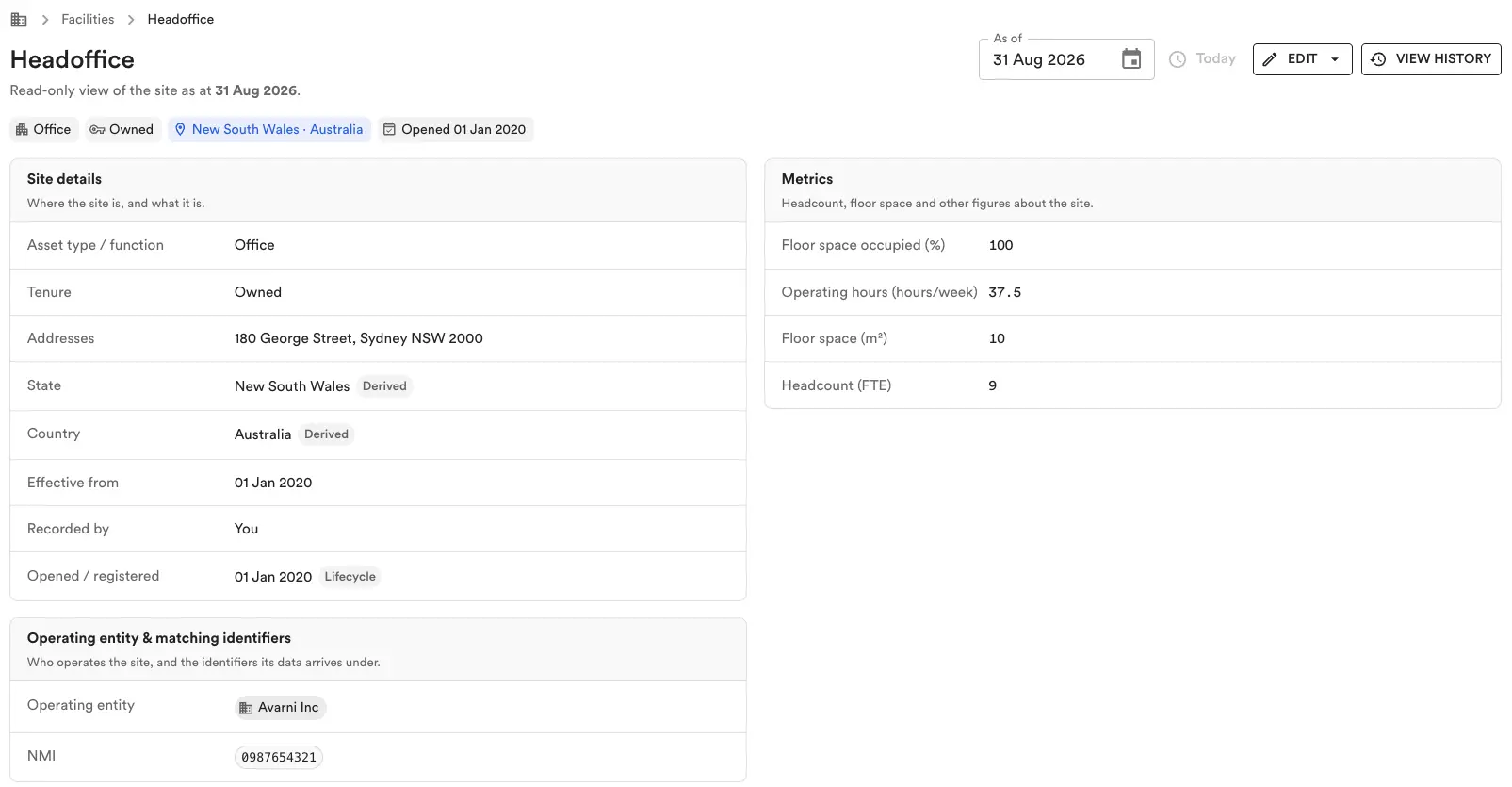
New this month. You can now hold your consolidation structure in Avarni: legal entities with their ownership percentages and parent-child relationships, and the sites that sit underneath them.
Every value is dated. An acquisition in March, a disposal in September, a lease that ends: each is recorded as a new period rather than replacing what came before. Last year's number stays reproducible after this year's restructure, and the boundary you disclosed becomes something you can produce on request rather than a spreadsheet that has since been edited.
Each facility also holds the identifiers that appear on your bills: site address, NMIs, meter and account numbers. Data coming in attributes itself to the right site off those identifiers, the way a cost centre code routes a cost. The mapping spreadsheet between your utility invoices and your sites goes away, and site-level reporting stops depending on the person who used to maintain it.
Market-based Scope 2 for Australia and New Zealand
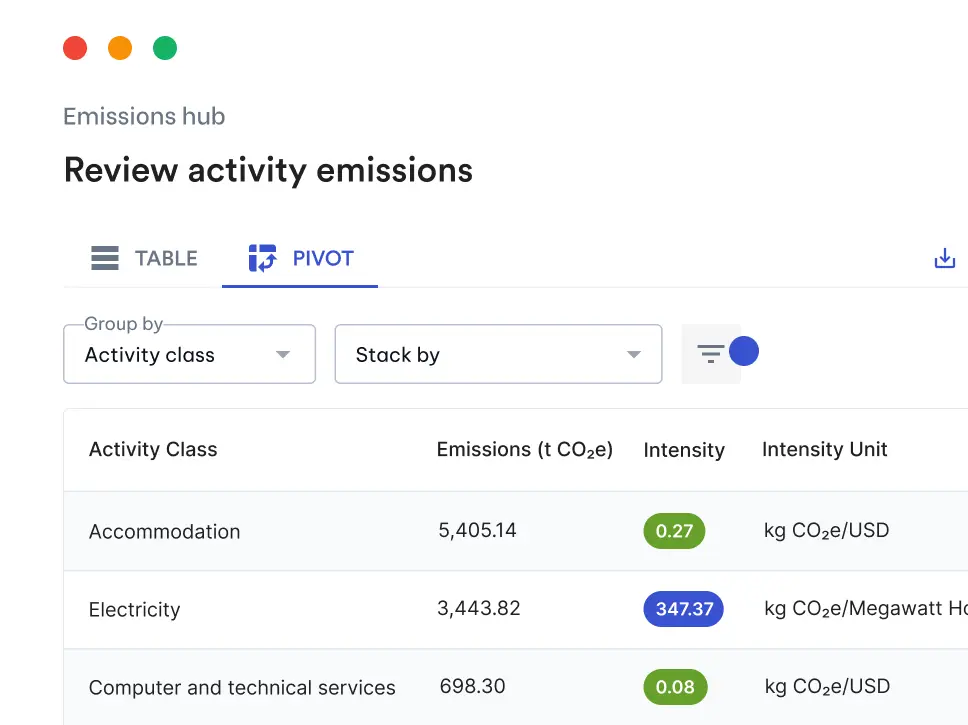
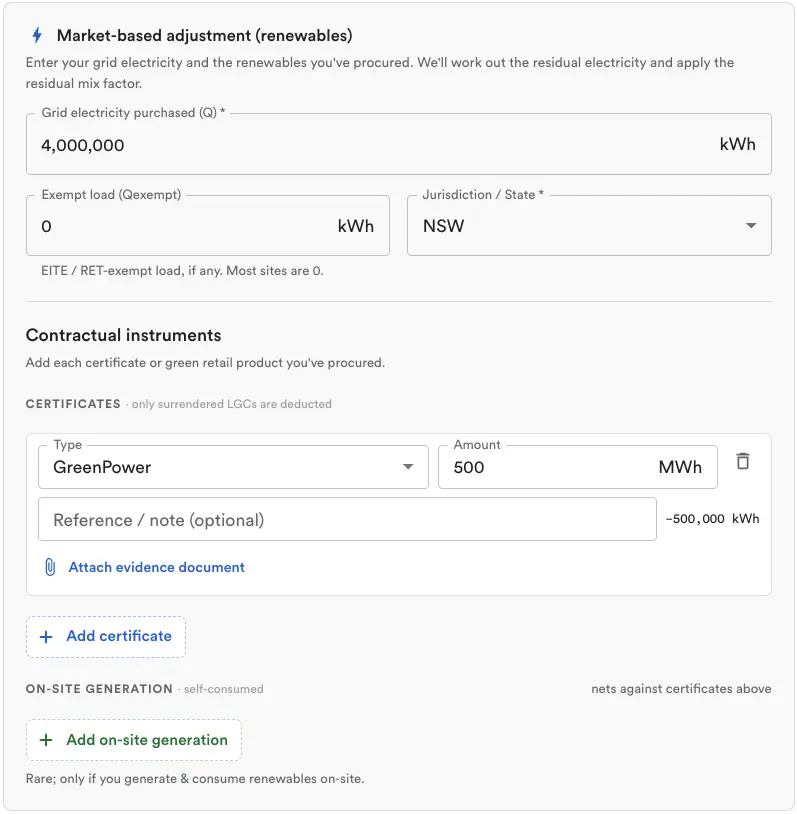
Dual Scope 2 reporting has meant one number from the platform and another from a workbook nobody wants to hand an assurer. You can now calculate the market-based figure in Avarni.
Enter your grid purchase and your certificates, and the residual is calculated to the NGA Factors 2025 method with the working shown. Evidence attaches to each instrument, so the surrender receipt sits on the calculation rather than in a folder somewhere. Speak to your account manager to have it turned on.
Why this matters for your team
- Restatements: your prior-year boundary survives this year's acquisitions and disposals.
- Cost to close: invoices attribute themselves to the right site off the identifiers already on them, so nobody spends the month coding utility bills to a mapping spreadsheet.
- Assurance: the market-based calculation and its supporting evidence sit together, not in a workbook and a folder.
For previous product updates and other articles, visit our Blog at avarni.co/blog.