Australia's manufacturing sector is under growing pressure to transition to a low-emissions future. The introduction of the Australian Sustainability Reporting Standards (ASRS) is accelerating this shift, placing mandatory climate-related disclosures front and centre for manufacturers across the country. For CFOs, Heads of Sustainability, Risk and Compliance, the challenge is twofold: manage rising carbon risk and unlock value in the supply chain, while navigating complex data and regulatory requirements.
For manufacturers that prepare early, ASRS is an opportunity to future-proof operations, drive efficiencies, and build resilience in a rapidly decarbonising economy.
Key takeaways
- ASRS (AASB S2) makes climate-related disclosure mandatory for large manufacturers, covering Scope 1, 2 and 3 emissions, governance and transition plans.
- Corporate supply chain (Scope 3) emissions are on average 26 times higher than direct operational emissions, and typically dominate a manufacturer's footprint, according to CDP.
- The EU's Carbon Border Adjustment Mechanism (CBAM), in force since 1 January 2026, adds a commercial reason to quantify embedded carbon in exports.
- Manufacturers that build supplier data collection and credible transition plans now are better placed to retain customers, secure investment, and meet ASRS requirements.
Mandatory climate reporting is here for manufacturers
ASRS (AASB S2), developed by the Australian Accounting Standards Board (AASB) and aligned with the International Sustainability Standards Board (ISSB)'s global climate framework, makes climate-related disclosure mandatory for large Australian entities, including many manufacturers.
Manufacturers are expected to disclose Scope 1, 2 and, critically, Scope 3 emissions, alongside detailed transition planning, climate governance, and scenario analysis. Scope 3 emissions typically dominate a manufacturer's footprint and require detailed data from suppliers, many of whom may not yet be collecting or reporting this information. On average, corporate supply chain emissions are 26 times higher than direct operational emissions, according to CDP.
ASRS disclosures carry legal, financial and reputational consequences. Climate-related disclosures sit alongside financial statements and face the same scrutiny from boards, auditors and investors.
Decarbonisation pressure is intensifying
Manufacturers face pressure from several directions at once: shifting global value chains, tightening trade rules, and rising expectations from customers, investors and regulators.
The EU's Carbon Border Adjustment Mechanism (CBAM), which took effect on 1 January 2026, penalises imports from emissions-intensive supply chains, adding a direct commercial cost to unmanaged carbon risk for manufacturers exporting into the EU.
This pressure is commercial as well as regulatory. Climate-related financial disclosures under ASRS compel manufacturers to understand, quantify and reduce emissions across their value chains, from upstream raw material suppliers to downstream transport, packaging and product use. Manufacturers that can't demonstrate credible emissions reductions risk losing major customers and access to global markets, while those that move early are better placed to secure investment, win business and retain talent.
Data is the key challenge, and the key opportunity
Data is the main barrier to ASRS-ready reporting for most manufacturers. Internal systems often don't capture the right information, and suppliers may be too small, offshore, or under-resourced to report at all.
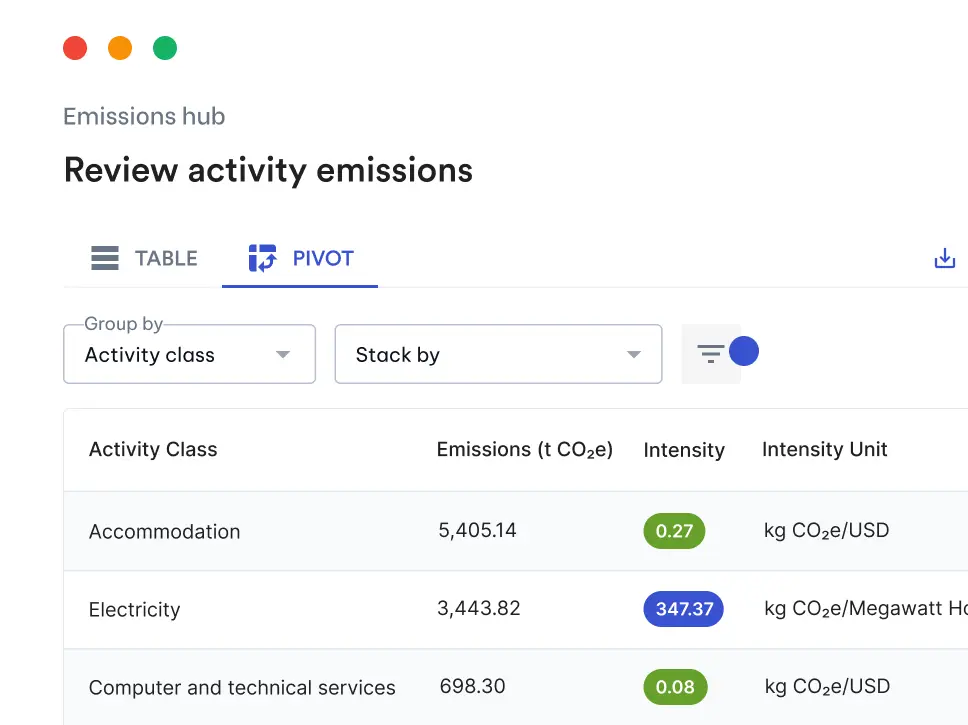
Avarni's manufacturing industry tools help close this gap. Avarni helps manufacturers rapidly assess their emissions exposure, including indirect (Scope 3) emissions, by ingesting procurement data and automatically mapping it against emission factors. Instead of relying on industry averages, Avarni lets companies invite suppliers to submit actual emissions data, building a more accurate footprint over time.
With automated analytics, manufacturers can identify emissions hotspots, prioritise reduction opportunities, and model different transition scenarios, moving beyond reporting towards strategic emissions reduction planning aligned with ASRS expectations. For companies facing increasing audit and assurance requirements, this level of rigour and transparency will be essential.
Supply chain action will drive real impact
Scope 3 categories like purchased goods and services, upstream transport and capital goods typically dwarf a manufacturer's operational emissions, so decarbonisation efforts need to extend well beyond the factory gate.
This requires a shift in procurement strategy. Manufacturers need to work closely with suppliers, especially high-emitting or strategic ones, to set expectations, gather data and co-develop low-carbon alternatives. In some cases, this means reconfiguring sourcing models, supporting supplier upskilling, or working with industry groups on standardisation.
Platforms like Avarni let manufacturers track supplier emissions over time, benchmark performance, and demonstrate progress to regulators, investors and customers. Embedding emissions insights into procurement and product development decisions aligns commercial goals with climate targets, turning sustainability reporting into a driver of long-term competitiveness.
Transition planning must be more than box-ticking
ASRS requires companies to publish detailed transition plans covering target-setting, capital allocation and board-level oversight.
Transition plans need to be grounded in robust data, backed by credible emissions pathways, and integrated into broader business strategy rather than treated as a static or siloed exercise. For energy-intensive operations, this may mean investing in process electrification, renewable energy or low-carbon materials. For others, it could mean redesigning products, optimising logistics, or shifting to circular models.
Avarni's scenario planning tools help manufacturing leaders stress-test assumptions, compare decarbonisation pathways, and understand the financial implications of different strategies, supporting transition plans that meet ASRS requirements and hold up over time.
What manufacturers should do now
ASRS requires Australian manufacturers to quantify climate risk, build credible transition plans, and report with the same rigour as financial statements.
Data gaps, supply chain complexity and regulatory uncertainty make this a genuine challenge. The risk of delay is rising as customers, investors and regulators all increase what they expect from manufacturers on climate.
Manufacturers that act now can differentiate in the market, attract investment, and build more resilient businesses. With the right tools and a clear plan for engaging the supply chain, manufacturers can meet ASRS requirements while reducing real-world emissions and building competitive advantage.
Frequently asked questions
What emissions must manufacturers disclose under ASRS?
ASRS (AASB S2) requires large manufacturers to disclose Scope 1, 2 and 3 emissions, alongside climate governance, risk management and transition plans, in line with the ISSB's global framework.
Why do Scope 3 emissions matter so much for manufacturers?
Scope 3 emissions, covering purchased goods and services, upstream transport and capital goods, typically dominate a manufacturer's footprint. Corporate supply chain emissions are on average 26 times higher than direct operational emissions, according to CDP.
How does the EU's CBAM affect Australian manufacturers?
CBAM, in force since 1 January 2026, requires EU importers to report the embedded carbon in certain goods and pay a corresponding levy. Australian manufacturers exporting to the EU need to quantify and report embedded emissions to stay competitive.
How can manufacturers collect Scope 3 data from suppliers?
Most manufacturers start by mapping procurement data against emission factors, then move to direct supplier engagement, inviting suppliers to submit actual emissions data rather than relying on industry averages alone.
Summary
- Mandatory climate reporting is here for manufacturers: ASRS (AASB S2) makes disclosure of Scope 1, 2 and 3 emissions, governance and transition plans mandatory for large manufacturers, with the same scrutiny as financial statements.
- Decarbonisation pressure is intensifying: Trade rules like the EU's CBAM, alongside customer and investor expectations, are adding commercial weight to climate risk for manufacturers.
- Data is the key challenge, and the key opportunity: Most manufacturers lack the systems to measure emissions across tiered supply chains. Avarni closes this gap by mapping procurement data and enabling direct supplier data collection.
- Supply chain action will drive real impact: Scope 3 categories like purchased goods, transport and capital goods dwarf operational emissions, making procurement the centre of any credible reduction strategy.
- Transition planning must be more than box-ticking: ASRS transition plans need to be data-backed and integrated into business strategy, not treated as a compliance formality.
- Frequently asked questions: Manufacturers must disclose all three emissions scopes under ASRS, Scope 3 typically dominates their footprint, CBAM adds cost pressure for EU exporters, and supplier engagement is the practical path to better Scope 3 data.
Manufacturers that act now can differentiate in the market, attract investment, and build more resilient, future-ready businesses under ASRS.
Originally published: 12/11/2025