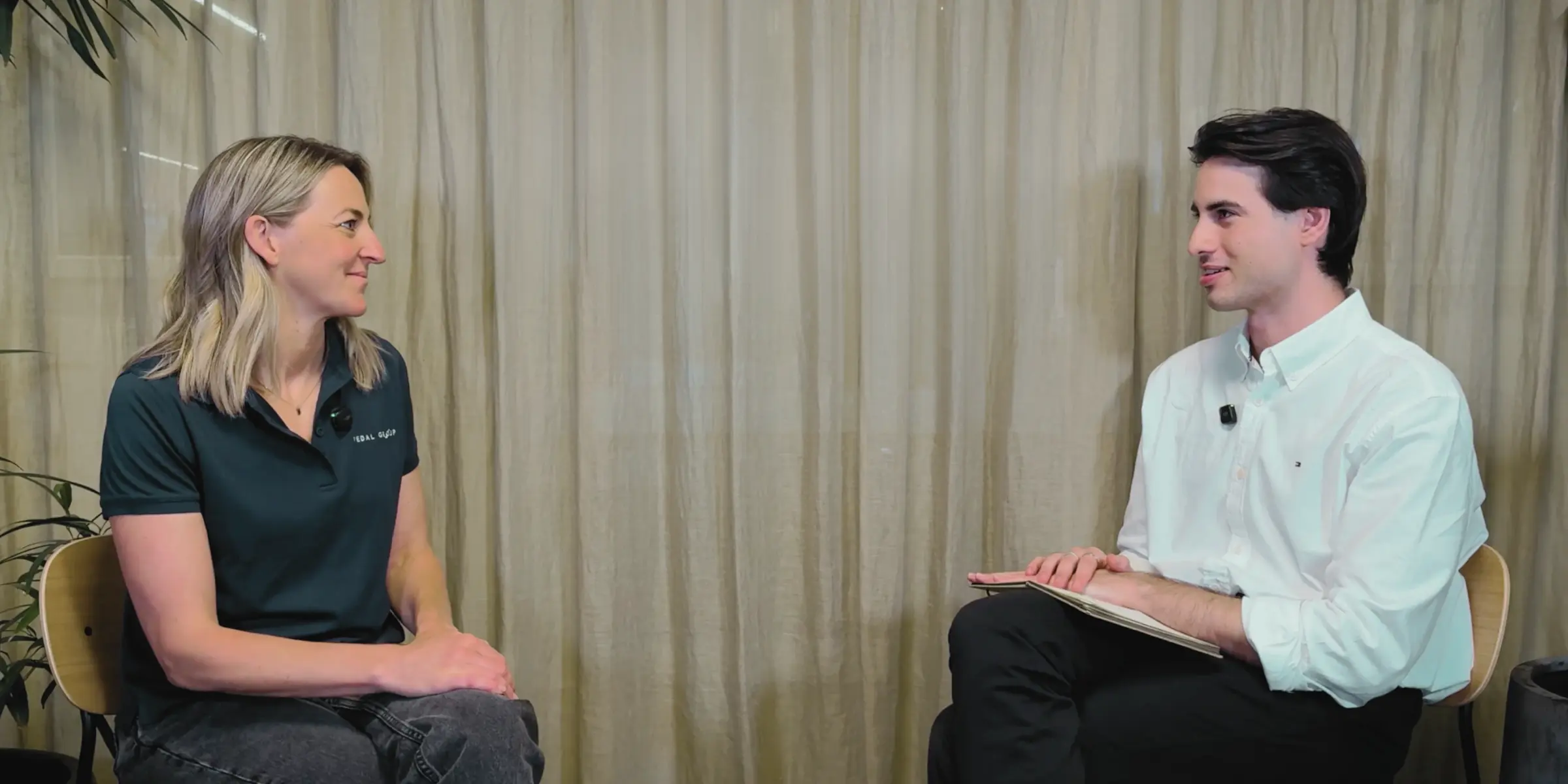
Our Co-Founder and Co-CEO Misha Cajic recently sat down with Jacquie Sharples, ESG Leader at Pedal Group (the group behind iconic Australian cycling retailer 99 Bikes) for a candid conversation about what it really takes to build a sustainability program from the ground up.
Jacquie shares how Pedal Group moved from a passionate, purpose-driven culture and a "beautiful spreadsheet" to an audit-ready carbon accounting process, and what prompted that shift. She opens up about the complexity of consolidating emissions data across a multi-site, multi-country business, how she's navigating the overlapping demands of B Corp, ASRS, and other reporting frameworks, and why efficiency matters just as much as compliance.
She also reflects on what she wishes she'd known when starting out, and what she's hoping to achieve in the next 12 months: from locking in Scope 1 and 2 targets to establishing a Scope 3 baseline ahead of their FY27 reporting deadline.
We've embedded the full transcript and video interview below. Short on time? We've also put together a cutback version if you'd prefer the highlights.
The full interview: Jacquie Sharples, Pedal Group
Misha: Thanks, Jacquie, for joining me today. Pleasure to be here and meet in person. And I also am a big fan of bikes and I'm actually a customer, so it's good to also have it reciprocated. So thanks for your time.
Jacquie: Amazing. Happy to be here. Good to hear that you're on the bike as well and excited to talk all things carbon accounting today.
Misha: I just wanted to start at the top and understand a little bit more about the context of this conversation. So what is your role actually at Pedal Group and how does it help with achieving their business goals?
Jacquie: So essentially, I'm the ESG leader at Pedal Group. My job is to take hold of all of our programs which aim to increase the positive impact that we have on the environment and society, so our customers, our suppliers, our people that work in our business, but then also to work on the governance side of things. So there's just increasing... regulations in this space from sustainability reporting that we'll talk about, no doubt, to gender targets, for example. So there's increasing reporting and governance in this space, which I'm responsible for as well.
Misha: Who do you work with most closely in the team? And how's that kind of changed over the last couple of years?
Jacquie: Great question. I obviously work very closely with finance. I report directly to our CFO and a lot of the financial data does go into reporting. Things that we're doing. But to be honest, I work with all parts of the business. So depending on our different goals and programs, I might be working with our product team to work on reducing waste, you know, waste in our packaging, for example. Working directly with our retail teams. So they're the ones that are selling bikes, which are creating positive impact. They're the ones dealing with waste day in, day out. So I get to, it's one of the interesting things about my job is that I get to work with all sorts of different people and teams within the business.
Misha: Sustainability, especially because Pedal Group sells bikes, has sustainability always been part of the DNA of Pedal Group and it's now becoming a little more formalized.
Jacquie: Yeah, spot on. I mean there was never an ESG leader. I think this is a brand new role. Because purpose and positive impact in terms of health and well-being in the environment was just something which is embedded into what we do.
So we obviously sell bikes. We're trying to help people improve in terms of their physical health, their mental health. We're trying to get cars off the road. But in terms of driving programs forward in the business, there's passionate people and passionate leaders, which drive things forward. We're a certified B Corp off the back of our CEO and a group of people in the business that were passionate about it.
But as these programs grow in momentum and rigour, and there's more regulations, I think that sort of brought the need in to make sure that we are walking our talk and making sure that we do track towards these goals over time and not get distracted when things get busy with business as usual.
Misha: How do you scale that engagement across the entire team, across everyone that's working in your stores? How do you ensure that everyone's actually thinking about how these programs tie back into the 'why'?
Jacquie: Yeah. That's a great question. It's certainly something that I'm still learning, being in this role for about 12 months. I think when it comes to our core purpose of making sure people enjoy that experience of riding bikes, everyone's bought into that. Everyone understands and has a personal connection with what bike riding means to them that works in the business.
When it comes to wider and broader sustainability goals, I think that can be a struggle, depending on what the goal is, depending on people's personal values. But I think what we're trying to do as a business is try to connect it to purpose, wherever that we can. And the more people understand that connection to the purpose, you know, the more they'll be incentivized to. I guess do the right thing.
You know, a really good example of that is we we have bike upcycling in stores. There are challenges with that — space and having to collect these old bikes and store them somewhere, and connect with our partners. But once the staff in store meet the charities and see the work they're doing and the benefit that these old bikes have, it's easy then to find the time and space and capacity to do that. So yeah, connecting with purpose wherever you can.
Misha: Well, actually, when you joined the business first, what did it look like 12 months ago when you joined in comparison to now?
Jacquie: I think when I came into the business, we didn't have — necessarily — structure around our ESG framework and goals. And so one of the first things that we did was we sat down and created a framework for our ESG programs and set three specific goals under each of our key areas: people, planet, and community. And then there was some accountability around tracking towards those goals. And then, you know, looping back at the end of the first 12 months to say, you know, how did we go? What went well? What didn't go well? And then, a bit of a stronger process around materiality. So, you know, speaking to our leaders, speaking to people in stores, speaking to our customers, what is it that you care about? And what is it that you want to see action in? And what does B Corp require from us? And what does the regulations require from us? And then marrying all those pieces together to work out what is it we're going to need to work on moving forward.
Misha: Yes, so actually, that's something that we've seen with some other customers where there's this intersection between B Corp and, for some of the more industrial customers, they've also got reporting frameworks like NGER that they have to report to. And now finally, ASRS has been thrown into the mix. So you've got almost, for a lot of these, there's different things that it's reporting but a lot of the foundational data is the same for each of them and they need to be reported in slightly different ways. Tell me a little bit more about how you've had to tackle that challenge.
Jacquie: Yeah, I think it's a massive challenge spending time reporting to all the different frameworks, as you said, and it's a challenge that we have as a business as well. I hope that the reporting frameworks can see that and start to consolidate what they're asking. And you see that in B Corp's new standards that they really have looked to some of the other... the reporting standards to work out what are the things that we're going to be reporting and can we just report on that once.
In terms of the challenge in the business, I think you want to make the reporting as efficient and streamlined as possible so that we can spend more time actually driving impact forward. So I guess us as a business, we're just trying to work out, yeah, where are those similarities? How do we streamline our internal processes as much as possible? And what tools can we use to make sure that these processes do run as smoothly as possible?
Misha: And so, diving into that a little bit, then, what was the most challenging part day to day in your role of that reporting piece?
Jacquie: I still think reporting is a challenge day to day. I certainly haven't nailed it. And depending on what goals we choose, we're going to have to constantly be coming up with new styles of reporting. I think the biggest challenge is... In a multi-entity business like Pedal Group, with lots of different sites in a few different countries, the data that we need to pull together is complex. It is kept by different people in different formats, in different places. So, I think, still, our challenge today is bringing that data into one place regularly in a way that it can actually tell us what's happening and drive our actions and our impact moving forward in a timely manner. And that's still a challenge for me. At the moment.
In a multi-entity business like Pedal Group, with lots of different sites in a few different countries, the data that we need to pull together is complex. It is kept by different people in different formats, in different places.
Misha: Okay, so switching gears then, what did you set out to solve when you started looking for sustainability reporting software, particularly around that?
Jacquie: Yeah, I think we're a business that we're already very interested in our carbon footprint. So being a B Corp, having goals and aspirations around reducing our carbon emissions, we were doing well. We could internally implement a system without a dedicated ESG person, we had obviously a beautiful spreadsheet like all businesses do where we were calculating some of our carbon footprint trying to report on it through our annual processes, but it was not going to suit us moving forward. Once we had that requirement for having to report to the government, we knew that whatever process we built moving forward had to be auditable. It had to be consistent, not reliant on sort of one person's knowledge or one spread. That might fall apart. So we were really looking to build something which was audit ready, as efficient as possible, and would hopefully grow with the business as well. So that's what we were looking for when we went out to market to look for a partner in this.
Misha: So tell me a little bit more about how you kicked that process off and what were the top things that you were looking for?
Jacquie: So we kicked the process off by going out and chatting to different providers, essentially. So I already knew of some carbon accounting platforms. So I began with speaking to some of the local providers here in Australia, as well as a few from overseas as well, just so that we could better understand what are the differences between the different software platforms out there. We really needed to make sure it was something that suited our needs as a sort of, you know, medium business, but multi-site. We sell products, not just a service as well. So we had to... to make sure that the platform was able to sort of ingest that level of data. And then we're also looking for someone that was gonna support us through the journey as well. So having a tool that was audit ready, really efficient and having a team that was going to be able to support us as well.
Misha: And so obviously, we've been working together now for some time. What made you choose Avarni versus other products that you ended up looking at?
Jacquie: Look, at the end of the day, when we chose a carbon accounting platform, we were looking for a couple of different things. I guess top of the list at the moment is obviously being ready for audit. With the new disclosure regulations coming in, we had to make sure, whatever numbers came out of this platform, they were going to be able to be audited in a way that we, you know, tick the box, which was great from a financial reporting point of view.
But diving deeper than that, we wanted to make sure that we'd be able to look at those numbers and be able to drive some sort of impact long term. So it's great to be able to report this to the government. The whole point of reporting is hopefully to drive impact. So where can we actually reduce our carbon emissions over time? Where are our hotspots? How can we understand that data better?
We were looking for compliance, but we were also looking for insight in that data as well. And then, third, we were looking for efficiency. So, which platform is going to possibly integrate with our accounting system? What's going to allow us to build a process which could be built into our sort of everyday financial processes, so that hopefully, this is not a scramble at the end of the financial year to create our you know carbon accounting numbers, and it just becomes part of something that we do. So, yeah, being audit ready, impact focused, and then also efficient.
We were looking for compliance, but we were also looking for insight in that data as well.
Misha: And how are you using Avarni today? So, what kind of, what have we tackled so far together, and what are we looking to get done with you over the next six months or so?
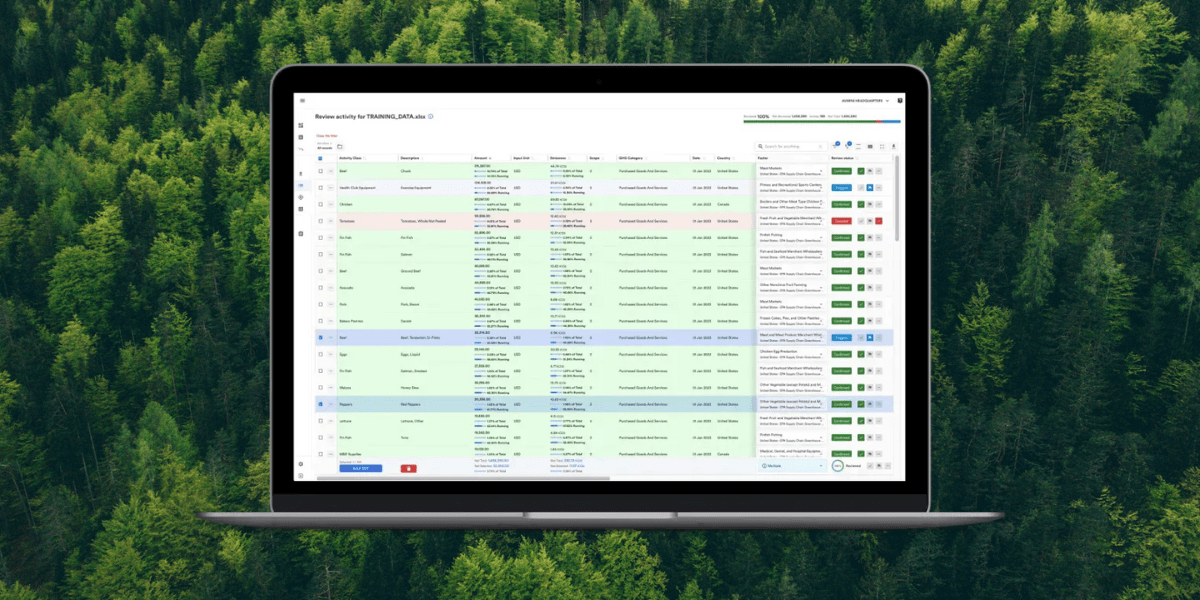
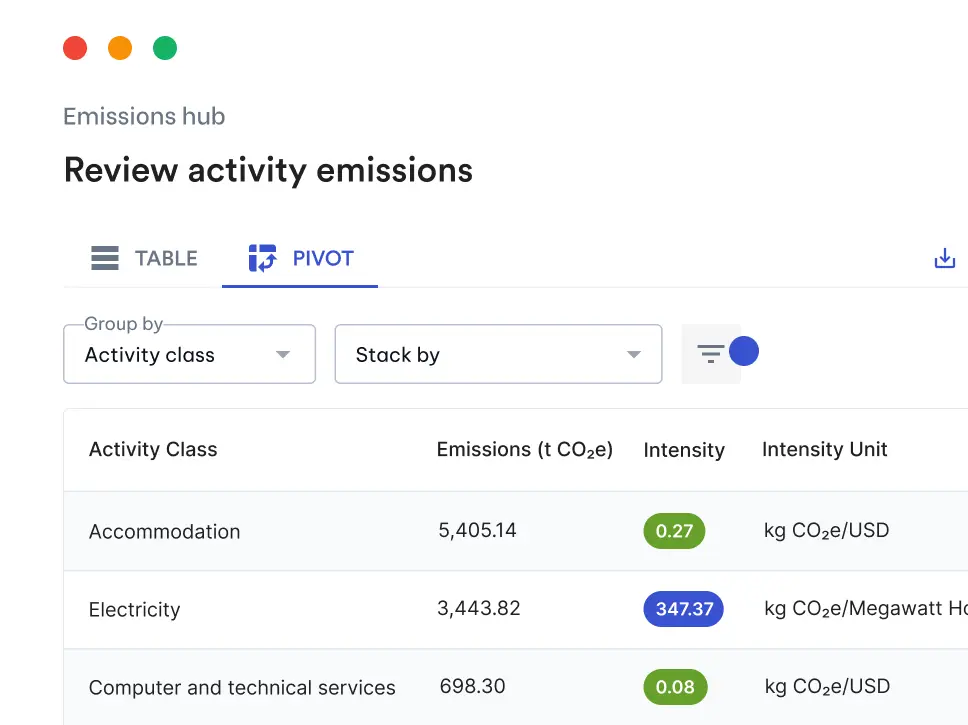
Jacquie: Yeah, so we're still in the implantation phase, I think. We're still really learning how to get our data into the platform in a way which is going to be efficient moving forward. We've started with Scope 1 and 2, primarily to make sure we get those numbers really solid. We are looking to set some targets in that space quite soon. We have also started the process with Scope 3 emissions as well, which, as I said before, we hadn't actually calculated all of our Scope 3 before. So getting that data in there, understanding where our data gaps are, is where we're at at the moment when it comes to the Avarni platform.
Misha: With Avarni, one of the things that we are really focused on is ensuring that when we implement our software, it's not just about giving you a login and a user guide and good luck, but about actually making sure that the implementation is successful, that we can continue to support you over time. So how have you found that aspect of working with Avarni?
Jacquie: To be honest, I've been really blown away with the level of support that we've got from Avarni. When you think software, you often think no live support, no real person behind that software. And that's not been the case with Avarni. held our hand through that implementation process, where you know, towards the tail end of it, now — but you've been so responsive as a business, you know, in terms of meetings, emails.
I've been really blown away with the level of support that we've got from Avarni. When you think software, you often think no live support, no real person behind that software. And that's not been the case with Avarni.
Maybe we've even annoyed you a little bit. You've been there through every step of the process, and we've got confidence that we've got a partner in this, which I think, you know, is something that's quite rare. I know I spent half an hour the other day on the phone to an AI assistant and ended up quite frustrated. So, you know, with a future which is so AI driven and perhaps, you know, faceless, Avarni is certainly the opposite of that. So, yeah, we've been thrilled with the implementation support so far.
Misha: Well, I'm glad to hear that, genuinely. We also think that that's a really important way to do things. I mean, especially with the new regulations and so much uncertainty around it. They are not just about giving a login and saying 'okay, figure this out' and you know, this is the compliance outcome that you're gonna get, and like we're just there to maybe tick it off, help you tick it off, but it's also about being able to leverage the other customers that we've got, to see what best practice is, and to bring those insights to you. So yeah, I'm glad to hear. What advice would you give to your peers who are only just starting on this journey, they're looking to do it for the first time and don't know where to begin?
Jacquie: I think, if you're starting on this journey, there's sort of, I think, two places to start at once. Everyone always talks about data, you know, obviously no matter what sort of tool or software that you have — crap in, crap out — so you know, having really strong data is really important in terms of getting a result which is going to actually drive some meaningful outcomes.
Having said that, the data is often imperfect, so you, you can't wait until the data is perfect. So whilst you're working on your data, you know, finding a partner that's going to help you speed up that process is really important. So looking for someone who has this knowledge in the space so that you don't need to have to spend time you know learning it all from scratch.
And then I think, understanding where you're at as a business, how you're going to grow as a business, so that you can find something which is going to meet your needs now, but then also scale with your business. As your business changes. And then I think, you know, that eye on efficiency is really important as well. We're all going to try to be audit ready, but making sure that that platform is as efficient as possible and it can integrate into your daily processes or your monthly processes is a really big one as well.
You can't wait until the data is perfect. Whilst you're working on your data, finding a partner that's going to help you speed up that process is really important.
Misha: So, if you look at 12 months from now, where we're at, what are you hoping that beyond compliance you'll be able to do with the data that you're getting from Avarni?
Jacquie: I'm really hoping that in 12 months' time, we've got some really solid Scope 1 and 2 target sets. And that we're in a place where we've hopefully got a baseline for our Scope 3 emissions so that we can understand them better, work out where we should be putting our effort. Can we set some targets in that space as well and start to make some progress there as well? I guess number one is making sure that we are moving forward to decreasing our carbon emissions would be amazing in 12 months' time. And then, second to that, also making sure that we are compliance ready. So we will be, we're in group two, so we will be reporting at the end of FY27. So hopefully we'll be submitting our financial reports in a way that makes us feel really confident as well.
Misha: Awesome. And those emissions reduction targets, beyond just obviously the positive impact that they're going to be having, do you believe that there's actually some financial benefits that you might expect to see from executing on those targets?
Jacquie: Yeah, most definitely there usually is some sort of financial payoff. For meeting these goals, a really good example is you know shifting from our diesel vehicles to even a hybrid vehicle. We spend a lot a lot less on fuel. There's only one way that energy prices are going and that is up. So every time we save energy, we switch to solar. We can use our batteries. We're saving money on on our energy bills as well. So whilst that's not you know the core driver environmentally, it's certainly something that helps with our business decisions and business cases as well. So, yeah, I do expect that there is financial gain as well as environmental and society gains as well.
Misha: And that's of course going to further drive the business case for tracking this even more closely and actually achieving those targets.
Jacquie: Yeah, I mean it just makes it more of a no-brainer to be honest. Yeah.
Misha: Awesome. Well, I've really appreciated your time. Thanks for taking it and for chatting with me today.
Jacquie: No worries at all.
Misha: Looking forward to working with you more.
Jacquie: Yep, likewise. Thanks, Misha.