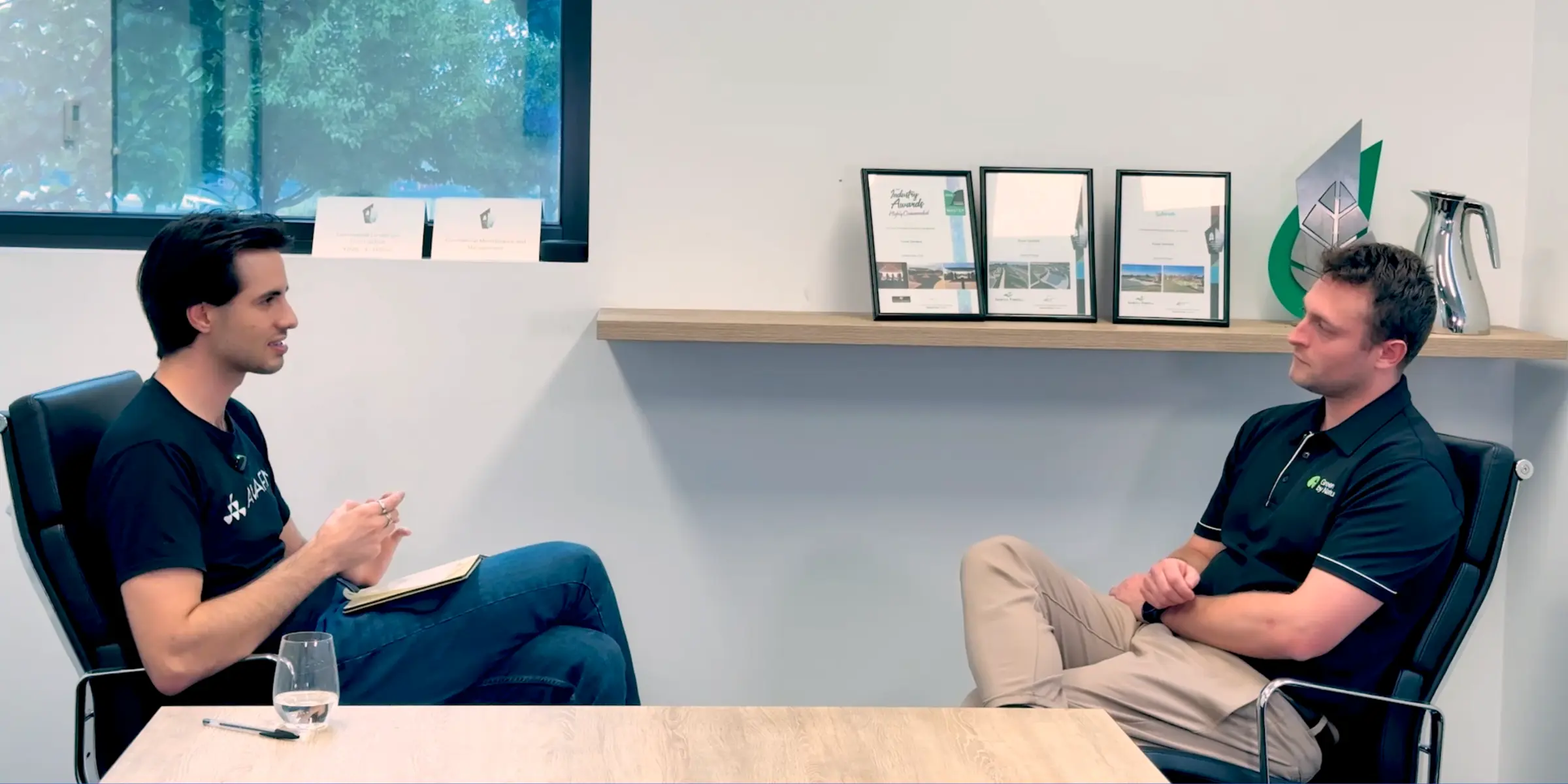
Our Co-Founder and Co-CEO Misha Cajic recently sat down with Christopher Carter, Marketing and CSR Manager at Green by Nature — one of the largest landscape maintenance businesses in Australia and New Zealand — for a candid conversation about turning a B Corp reporting obligation into a modern, automated carbon accounting process.
Chris shares why Green by Nature pursued B Corp certification in the first place, and how that commitment created a very practical data challenge: consolidating Scope 1 and 2 emissions from over a thousand utility invoices across 20+ depots. He walks through what the old spreadsheet-and-manual-entry approach looked like, why the team assumed automating it simply wasn't possible, and what ultimately led them to partner with Avarni.
He also reflects on getting a full year of FY25 environmental data loaded in roughly six to eight weeks, what's next as they integrate Avarni with their ERP, and how depot-level visibility is opening up a more holistic view of the business — from spotting high electricity usage to giving clients the Scope 3 data they'll increasingly expect from their suppliers.
We've embedded the full transcript and video interview below. Short on time? We've also put together a cutback version if you'd prefer the highlights.
Misha: Thanks for sitting down with me today, Chris, to talk about Avarni and Green by Nature's partnership. Great to be here.
Chris: Great to be here as well. Thank you.
Misha: So, Avarni and Green by Nature, the catalyst for our partnership was that Green by Nature has a B Corp certification and part of that certification is of course a lot of manual data collection and putting a report together as part of that. Tell me a little bit more about why Green by Nature pursued B Corp in the first place.
Chris: So, Green by Nature is one of the largest landscape maintenance businesses in Australia and New Zealand. So, we we work with all kinds of green spaces from local council parks to elite sports turf to education facilities and campuses. And so, naturally, we're really working with the environment every day. And that's what everyone is passionate about is is the environment. And that's why we have an ESG strategy. So we want to do this the best possible way. We want to invest in practices that are not cutting corners and we're doing this effectively and we want to invest in software and platforms that help us get to this goal.
Misha: So with B Corp, achieving that, how does that actually help with what you're able to present to your customers and what your customers are actually looking for when they first come to you?
Chris: I think B Corp gives a differentiator in the sense that we're showing how strong our commitments are in this space. With that certification, B Corp essentially validates
the commitments that we have to our clients. You know, it's not just a piece of paper. We don't just have a a strategy that we're not really looking at. We're really really actioning these items. And it's a tough certification. So, we're really making sure that we're doing it properly. But it's yeah, it's really validating that we're serious about this stuff. And a lot of clients are really interested in the environmental impact element which B Corp encompasses already.
And then I guess there's the additional stakeholder groups that we're positively impacting as well. So that's additional validation for a client. I think it also means for them they know that we've got the ability to help provide sort of community and environmental data reporting for them because we're tracking that as best as we can and as best as sort of B Corp requires us to do as well. So for them they know that we've got data to sort of back up what we're saying.
Misha: Okay. And how does that certification that you have help your customers goals?
Chris: So I think it's the stronger elements is in the environmental space. So if our clients are looking to track Scope 3 emissions then we we're able to help show our own Scope 1 and 2 emissions and it's keeping us accountable to make sure that we're continuing to monitor that data. There's particular clients that have specific community targets as well, particularly in volunteer hours and making sure that we're trying to embed ourselves into their communities as best as possible. So I think that's a different element as well knowing that we're able to sort of validate the volunteer work and the community engagement work that we're doing as well.
Misha: So zooming into the environmental data, you make the point of, they have their own Scope 3 goals or potentially they just need to report it because they've got the compliance obligations. I think a lot of your larger clients now in 2026 need to begin actually tracking their Scope 3 in a way that's auditable and a key part of that is having key suppliers that can actually provide that data. So what that essentially means is that you also need to make sure that what you're doing is rigorous and auditable and defensible.
So when you first started looking at that B Corp certification, could you tell me a little bit more about which data challenges did you end up facing as you began to collect the information needed to report your Scope 1 and 2?
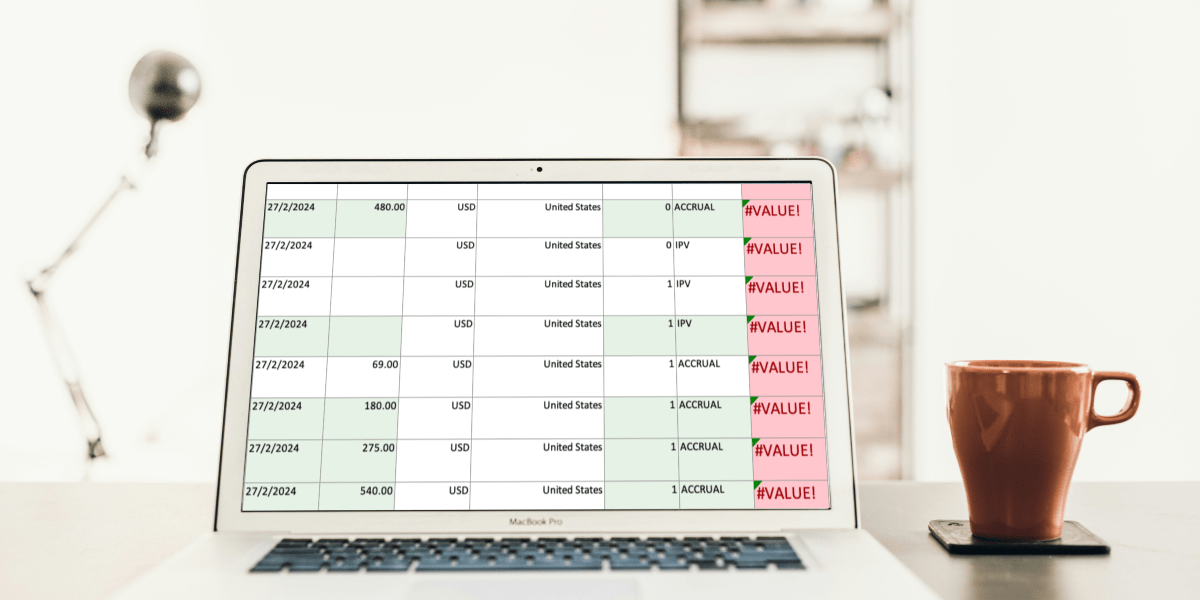
Chris: So the challenges that we had were definitely just sheer volume. So we have over 20 depots across Australia and New Zealand. The amount of utility invoices that we have for each financial year is a lot of work. So we needed to, we're really looking to streamline that and modernise our approach to doing that rather than manually doing it. Yeah, which is how we were doing it initially. So there was a lot of manual labor to find individual invoices and extract that data and then sort of upload that.
Misha: So, diving into a little more detail like when you were first initially doing that before you took an automated approach, what did that actually look like, like step by step?
Chris: We had individual team members taking the invoices that we have and uploading into a spreadsheet. So, we had sort of a master spreadsheet that we our external agency helped us design to make sure we're doing it in the best possible way. And then we were extracting data from invoices and we sort of had them split across. I think it was sort of state based that we were initially doing it, and yeah just sort of taking taking data and directly putting it into the spreadsheet.
We did have Toitū certification in New Zealand which is another environmental certification. Part of their requirements are that we're tracking our data, our Scope 1 and 2 data as well. So New Zealand was a little easier because we already had a tool to do that, but it still comes down to the number of invoices and manually uploading that data.
Misha: So with those problems in mind, you obviously went out to market to look for a way to automate that data collection. What were the top specific problems that you were looking to solve when you first went out?
Chris: So really we were just trying to find a way to fix this manual labor issue that we had with the sheer number of invoices, which I think there are over a thousand or so invoices. So we were really just trying to find a way to automate that system but we didn't think that was possible.
So we had two issues. We wanted to modernise our system in the sense of replacing the spreadsheet and going to like an online cloud-based software so that data is protected. And then we also wanted to work out how we can reduce that manual labor load. Which initially we didn't assume was possible. There were definitely options in that sort of, that cloud-based platform and then yeah we just happened to come across the idea that we can start to to reduce that manual labor load using AI.
Misha: So of course after you completed that search you would have looked at a few different options and Avarni and Green by Nature ended up partnering. So what led you to that decision to partner with Avarni versus other options that you looked at?
Chris: Avarni offered an ability to reduce this manual labor data extraction element that we hadn't really seen before. So along with the AI component was a huge one because if that worked we would be saving a lot of time and a lot of hours. Avarni was very forthcoming with the amount of support that they were willing to provide which was fantastic. And the interface, like the program itself looked easy to use, looked clean, looked sharp. So the second last two options were brilliant, but the ability to automate our invoices through our own ERP system was by far the biggest selling point for us.
Misha: And how's it been so far? So through that experience we've been working together now for a number of months how has that implementation gone and what are you hoping to achieve with us over the next year?
Chris: So yeah, we worked with Avarni to upload all of our FY25 environmental data for Scope 1 and 2 emissions which was a huge feat in itself. I think we did it in about 6 weeks to 2 months. Which is amazing considering how many invoices there were and that was over the December period as well.
So, we're really really happy with the fact that we managed to get that done and the support that Avarni provided us to I guess train your program to read individual invoices that we have, which you know, we've got a massive range of suppliers. So, we weren't sure if, you know, a lot of the invoices were going to work. So it was fantastic that it did and we're really really happy that we managed to achieve that goal that we set to try to achieve that in two or so months. And Avarni was brilliant at sort of keeping us on track and checking in as well to make sure that we were pushing things along on our end as well.
Misha: Awesome. That's great to hear. And it sounds like what we were able to achieve was that B Corp certification, or that B Corp deadline that we were aiming for. And of course for Green by Nature B Corp is only one, it's the most urgent need that needs to be solved, but it's only one part of what you'll actually need this environmental data for in the long run, it sounds like.
So how how is automating this process now setting you up for success with other potential frameworks or reporting needs that you're going to need in the future as a B Corp, as a certified B Corporation?
Chris: We obviously need to record our emissions data year-on-year. So the partnering with Avarni meant we could do that easier instead of doing that with our own spreadsheet system. So yes, we needed to action that as soon as we could for the previous financial year to catch us up to speed again. And then moving forward.
So, we're really excited to start to integrate Avarni with our ERP to hopefully entirely automate the system with the invoices kind of going straight through and kind of just formulating there, which is the perfect option if we can kind of have that happening and we're sort of monitoring and doing the, like we're spending our time doing the quality assurance checks rather than doing the manual upload. So, that's sort of the next phase of the project. And then really this is all to help prepare us as well for the mandatory reporting coming up in Australia.
And essentially, we want to be the best at this. We really want to show that we're doing this properly and we're not trying to cut corners. We really want to be best-in-class at tracking our emissions and using a best-in-class tool that can help us get there.
Misha: Awesome. And one thing that we were talking about earlier was that perhaps you expect that your customers are going to be asking for this information more often. How do you expect that need to evolve over the next couple of years?
Chris: I think definitely there's going to be a growing need for our clients to see and report on our emissions factors when we're doing work on their sites. So, that's coming in the future for sure.
Like we definitely know that clients are going to want to see the emissions so they can start to report on their own Scope 3. So the idea of being able to have sort of individual portfolios I guess for our clients and we can show them, you know, this is the work that we do for you, and this is where the emissions are going. This the water usage and the waste. And have a like a snapshot and it's almost like a client platform within Avarni. If we can use that and show them, you know, this data really quickly and easily that's a huge up for our clients.
We work a number of local councils and we know that they're particularly interested in being able to report on their Scope 3 emissions. And part of that obviously as a supplier to these councils, they'd like to see where the emissions are, and I guess what water and waste use we have, to be able to track that further.
Misha: One of the things that we often see is environmental reporting forces you to look at your data in a way in which you haven't before. Because think about it, you wouldn't have necessarily ever done this exercise of taking all the data out and seeing "how much waste are we using, how much water are we using". It allows you to have a bit more of a holistic view of those metrics across a lot of different depots.
Do you expect — and appreciating that this might not be like where your focus in the business — but do you expect that in the future that will actually allow you to have an extra way to view Green by Nature's operations across the business and across different depots and potentially find ways to run the business more efficiently. Like actually find where it might be running inefficiently. Like, you might be getting overcharged for a waste provider in one place versus another. Have you thought about that lens?
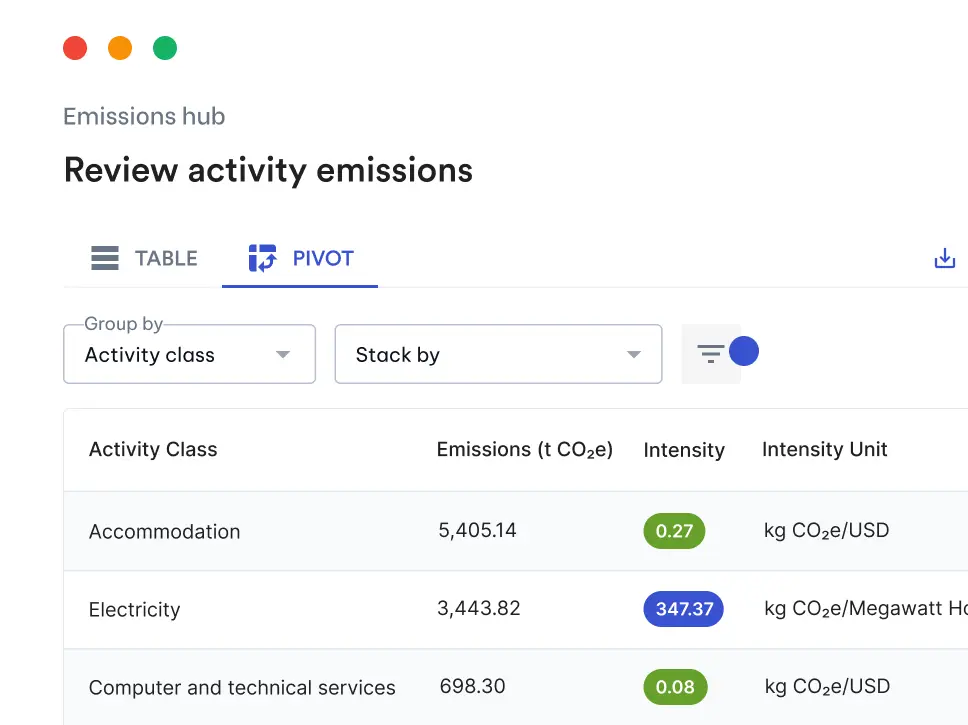
Chris: There's only been a couple of years worth of data for looking at all of our depots as a whole business and the emissions metrics for each of them. Which is really interesting because yeah, for the first time using Avarni, we can in a more sophisticated tool, we can really compare and sort of track the different metrics against each other.
So yeah, I definitely think there's going to be scope for being able to continuously improve at a depot level, which we probably hadn't had the ability to really like search and and get into that granular detail with before, especially if we know that one depot has a really high electricity bill for whatever reason, we can look at solar and things like that. Yeah, it's pretty cool to be able to see this at a depot level. And that is also a B Corp requirement to report at a depo level as well. So yeah, the more granular that we're getting the better.